
Here’s a summary of the AMA article “What doctors wish patients knew about Wilson disease” from the American Medical Association—
🧬 What Is Wilson Disease?
- Wilson disease is a rare, inherited genetic disorder where the body cannot properly eliminate excess copper, leading to copper buildup in organs like the liver, brain, eyes, and sometimes heart.
🧠 Key Points Doctors Want Patients to Know
1. It Affects the Liver and Brain Most
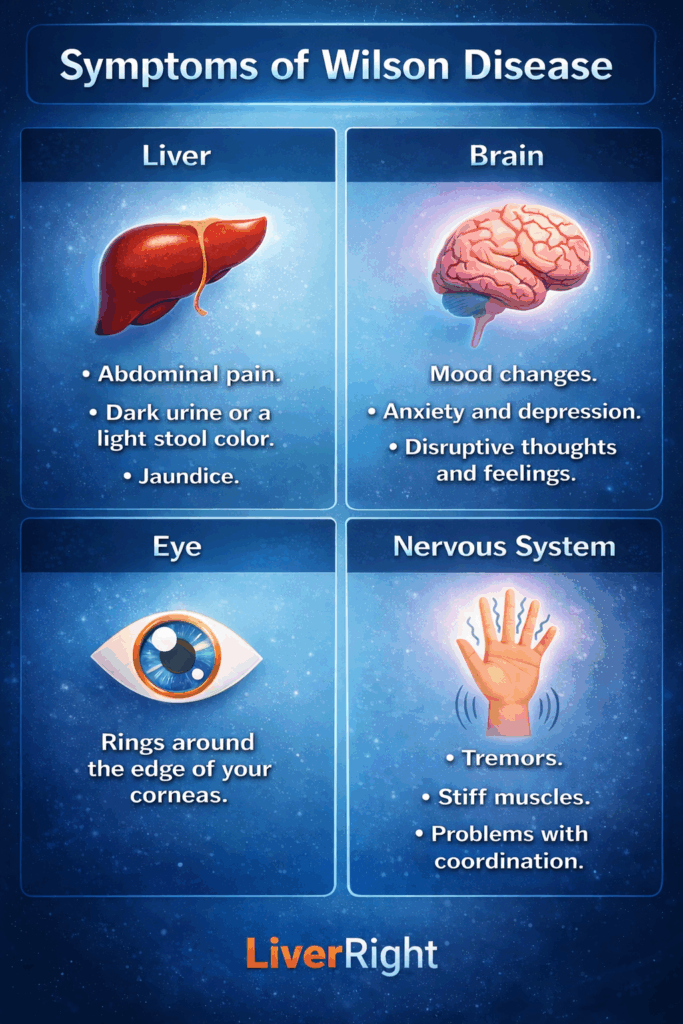
- In children, it often first shows up as subtle liver test abnormalities, sometimes with no symptoms.
- In adults, there may be neuropsychiatric signs like tremors, movement issues, personality changes, depression, or anxiety.
- In advanced cases, patients can develop liver failure with jaundice and bleeding.
2. Symptoms Can Be Misdiagnosed
- Early signs can resemble fatty liver disease, depression/anxiety, or common liver issues, which often delays diagnosis.
3. Diagnosis Uses Several Tests
- Blood tests (including ceruloplasmin levels)
- 24-hour urine copper measurement
- Eye exam for Kayser-Fleischer rings
- Liver biopsy and copper quantification
- Genetic testing can confirm the ATP7B mutation and help screen family members.
4. Treatment Has Two Main Goals
- Control excess copper: through medications (chelators and zinc) and diet.
- Manage complications: treat neurological or psychiatric symptoms if present.
- In severe liver disease, liver transplant may be required.
5. Lifelong Monitoring Is Essential
- Wilson disease requires ongoing monitoring of copper levels and liver health, and strict adherence to therapy is critical.
6. Diet and Lifestyle Matter
- Dietary copper restriction is helpful especially early in treatment, with guidance from dietitians.
- Patients are also advised to avoid alcohol to protect liver function.
7. Early Detection Improves Outcomes
- Diagnosing Wilson disease early—especially in children—can prevent severe complications and improve prognosis if copper accumulation is managed promptly.
8. Support and Awareness Are Important
- Because Wilson disease is rare and often misdiagnosed, increasing awareness and connecting with other patients or specialists can be supportive and helpful.
- LiverRight providers diagnose and treat Wilson Disease in adults.