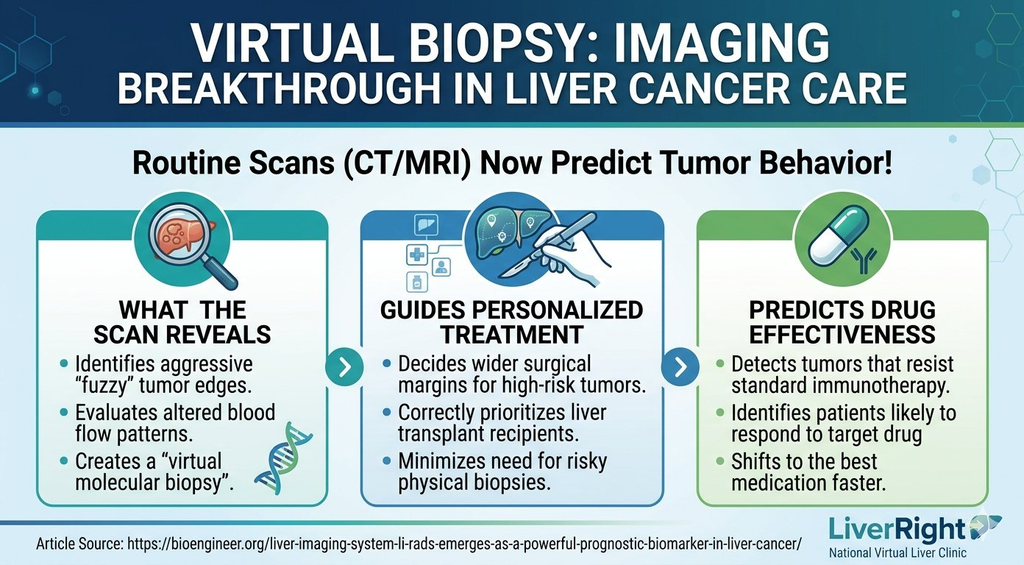
The article entitled “Liver Imaging System LI-RADS Emerges as a Powerful Prognostic Biomarker in Liver Cancer” from Bioengineer dated 10/03/2026 discusses a major shift in how doctors treat liver cancer by using routine liver scans (CT and MRI) to predict how aggressive a tumor is, rather than just diagnosing it.
Traditionally, a standardized reporting system called LI-RADS (Liver Imaging Reporting and Data System) was used strictly to help radiologists agree on whether a liver lump was cancerous or benign. Now, medical experts argue that these scans actually provide a “virtual molecular biopsy” that can guide highly personalized treatment plans without needing an invasive physical needle biopsy.
🔑 Key Takeaways
- The Visual “Fingerprint”: How a tumor interacts with blood flow on an image (like having fuzzy edges or altered surrounding blood vessels) serves as a direct visual clue to its genetic aggression.
- Customizing Surgery: If a scan shows high-risk visual features, surgeons can immediately decide to cut a wider, safer margin around the tumor, or alter how they prioritize patients on liver transplant waiting lists.
- Predicting Drug Success: Certain visual patterns on the scan can tell doctors whether a tumor will stubbornly resist popular liver cancer immunotherapies (like immune checkpoint inhibitors) or respond well to specific targeted drug combinations. This allows clinicians to skip ineffective procedures and pivot straight to what will work.
- The Next Steps (AI and Reporting Culture): To make this a standard practice, hospitals need to start using Artificial Intelligence (AI) to objectively measure these scan patterns to eliminate human variance. Additionally, radiologists must start explicitly detailing these risk levels in their everyday patient reports.
💼 Referral Relevance for LiverRight
Here at LiverRight we believe advanced imaging interpretation drastically reduces diagnostic guessing.
Our LiverRight telehealth providers handle patients with chronic liver disease who are at high risk for developing liver cancer (hepatocellular carcinoma), and integrating an AI or advanced LI-RADS screening evaluation into protocols serve as a core differentiator for our specialist network.