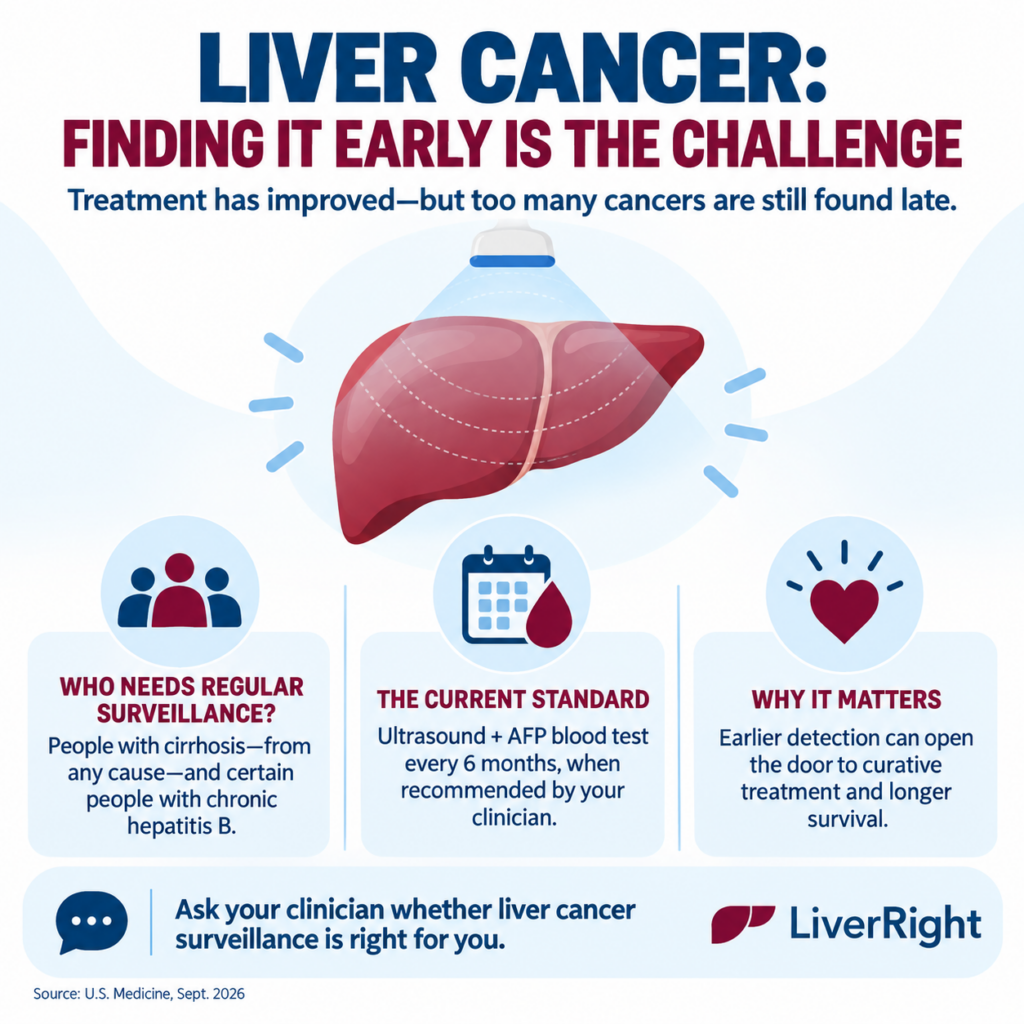
The article titled “For Liver Cancer, Screening, Not Treatment, Poses the Biggest Challenge” from US Medicine on 09/10/2026 indicates that liver cancer treatment has improved significantly, but the larger challenge is finding the cancer early enough for those treatments to work best. Most liver cancer develops in people who already have chronic liver disease, yet fewer than one in four people with cirrhosis receive recommended surveillance.
People with cirrhosis—from any cause—and certain people with chronic hepatitis B are at increased risk for hepatocellular carcinoma, the most common primary liver cancer. Current guidance recommends an abdominal ultrasound combined with an AFP blood test every six months for appropriate high-risk patients. Surveillance can find tumors before symptoms appear, when potentially curative treatments such as surgery, ablation or liver transplantation may still be possible.
Unfortunately, ultrasound can miss some cancers, particularly in people with obesity or fatty liver disease. Scheduling, cost, transportation, limited awareness and unclear responsibility between primary-care clinicians and liver specialists also cause patients to fall behind. New blood tests, imaging methods and risk-scoring tools are promising, but most are not yet proven replacements for routine ultrasound and AFP surveillance.
The consumer takeaway: If you have cirrhosis, chronic hepatitis B or another advanced liver condition, ask your clinician whether you need liver cancer surveillance every six months—even when you feel well and your routine bloodwork looks normal.