
Here’s an important LiverRight patient-education topic, because the intuitive consumer belief—“Tylenol affects the liver, therefore Advil must be safer for liver patients”—misses the much more important NSAID risk in advanced liver disease.
The counterintuitive point is: for adults with significant chronic liver disease—especially cirrhosis—Tylenol (acetaminophen) is generally preferred over oral NSAIDs, provided the acetaminophen dose is limited. AASLD guidance specifically advises avoiding NSAIDs in cirrhosis/ascites because they can reduce renal perfusion and precipitate kidney injury and fluid retention.
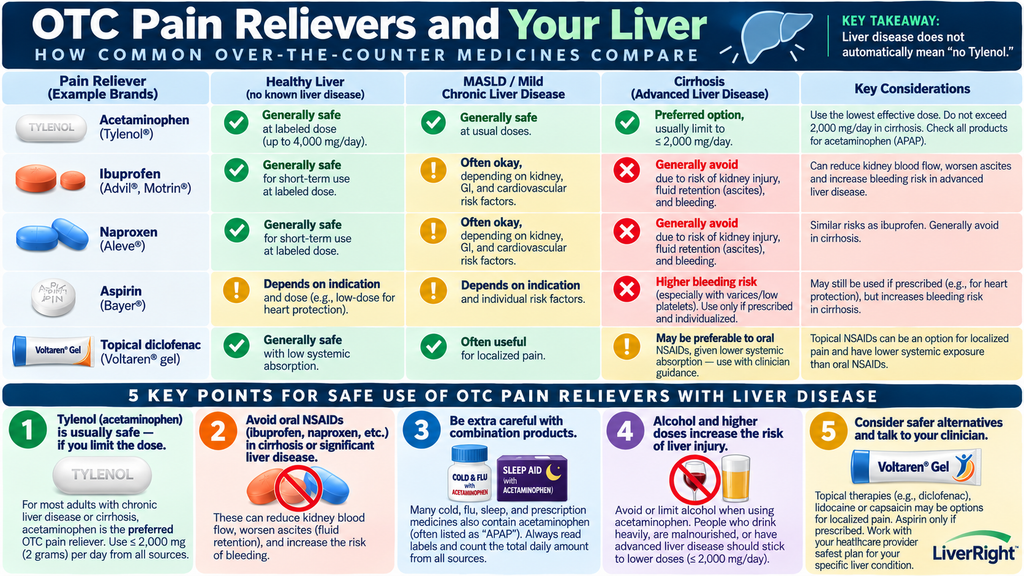
Why the apparent paradox? Tylenol is potentially directly hepatotoxic when overdosed, because excessive acetaminophen produces a toxic metabolite that can cause massive acute liver injury. FDA’s maximum for the general adult population is 4,000 mg/day from all sources, but liver disease changes the calculus. U.S. Food and Drug Administration
NSAIDs aren’t primarily dangerous because of direct liver toxicity. In advanced liver disease, their bigger problems are kidneys + sodium/water retention + bleeding. Cirrhosis produces a precarious circulatory state; NSAID inhibition of prostaglandins can reduce renal blood flow, potentially causing AKI, worsening ascites and interfering with diuretics. GI/variceal bleeding risk is another concern. That’s why “I’ll avoid Tylenol because my liver is bad and take Advil instead” can be exactly backwards.
Liver disease does not automatically mean “no Tylenol.”
For many adults with cirrhosis, acetaminophen is the preferred OTC pain reliever when limited to 2,000 mg/day or less, while ibuprofen, naproxen and other oral NSAIDs should generally be avoided unless their clinician says otherwise.
The important exception is acetaminophen overdose. FDA notes that exceeding recommended doses can cause acute liver failure and death, and accidental overdose commonly occurs because acetaminophen/APAP is hidden in multiple cold, flu, sleep and prescription combination products. Heavy alcohol use, malnutrition/fasting, low body weight and active hepatic disease deserve additional caution.