
US Healthcare is changing. Fast. There’s supernormal change– perhaps transformation, even, as four factors collide.
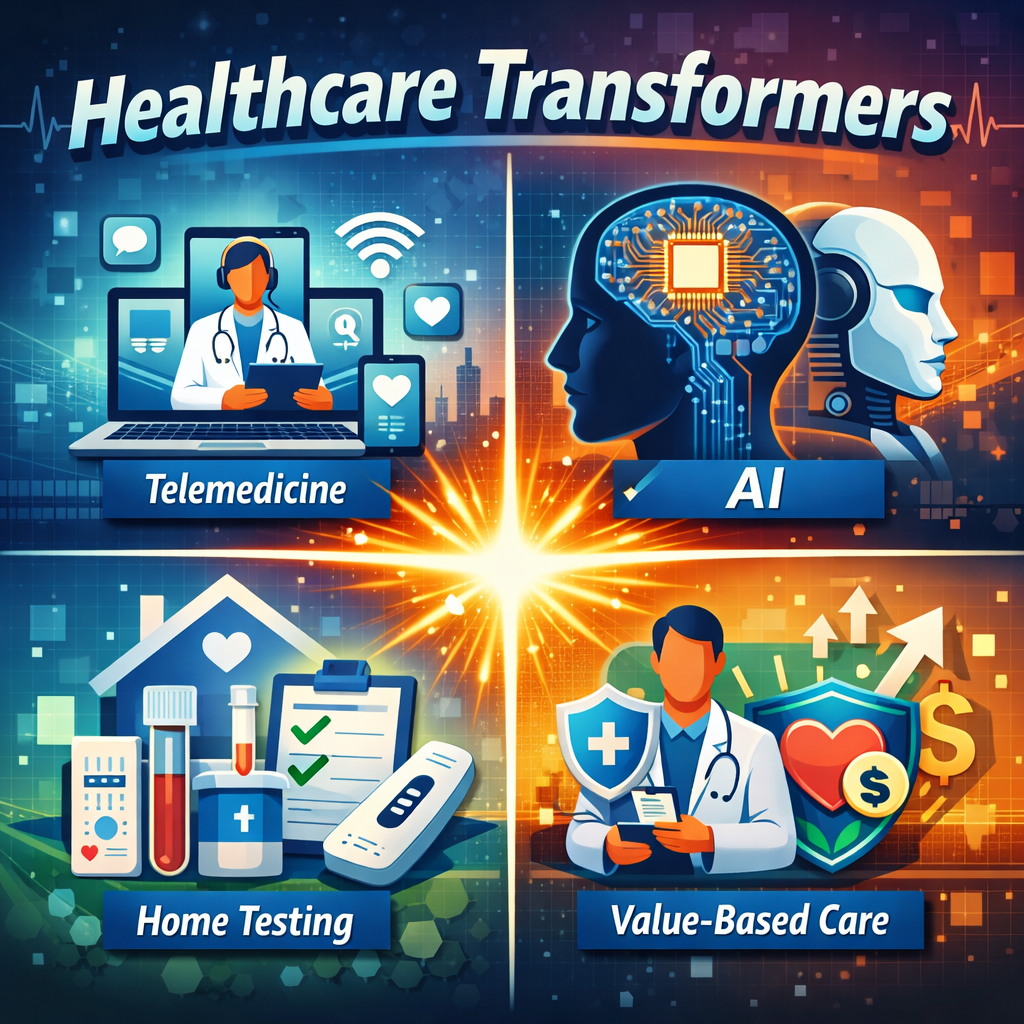
From the March 10, 2026 in The Economist: A new wave of disrupters takes on American health care Patients are unhappy. Can AI help?
Summary:
American healthcare—despite being world-class—is extremely expensive, complex, and increasingly distrusted by patients. Past attempts by big tech (Google Health, IBM Watson, Haven) to disrupt the system largely failed.
Now, a new wave of startups is trying again, driven by three main forces:
- Rising costs and dissatisfaction: Insurance premiums and out-of-pocket costs have surged, leading many Americans to delay care.
- Falling trust: Confidence in doctors and the system has dropped, with patients wanting more control over their health.
- Advances in AI and tech: New tools—especially generative AI—are making medical information more accessible and personalized.
Startups are responding by offering:
- Virtual clinics and direct-to-consumer care (e.g., Hims & Hers, Ro)
- Preventative services like full-body scans and advanced blood testing
- More flexible primary care models (subscriptions or pay-per-visit)
- Integrated digital health systems aiming to streamline everything from insurance to treatment
Generative AI is a key driver, helping patients understand symptoms, interpret test results, and access care outside traditional settings. However, it also raises risks around misinformation, over-testing, and unclear liability.
Bottom line:
After years of failed disruption, a combination of high costs, patient demand for control, and powerful AI tools may finally push meaningful change in the U.S. healthcare system—though risks remain.