The Science Daily article “Even moderate drinking linked to cancer and early death, major study finds” from November 1, 2026 (Source: Columbia University’s Mailman School of Public Health) is worth noting.
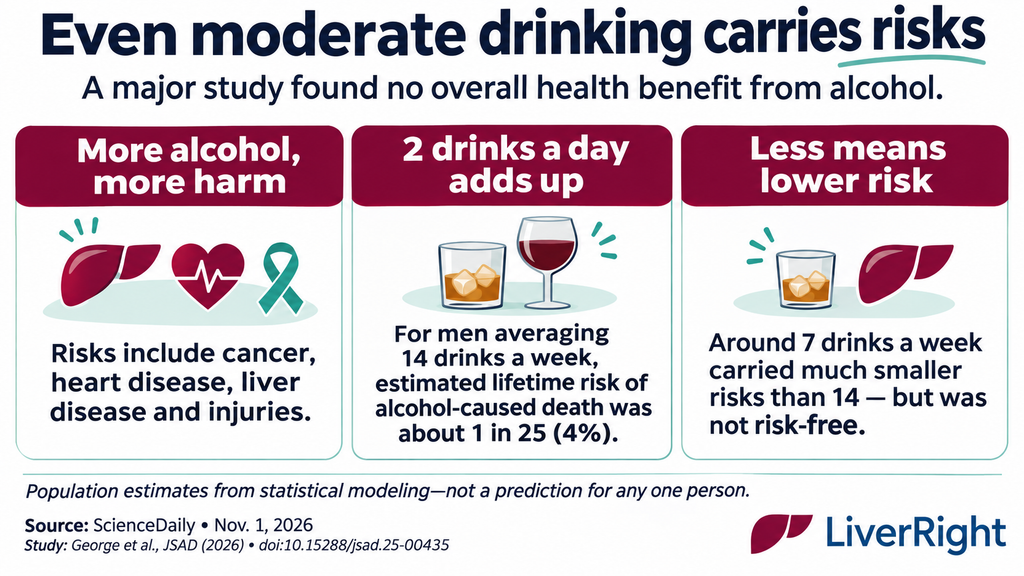
The main message: even “moderate” drinking carries health risks, and this study found no overall health benefit from alcohol. Drinking more generally meant greater risk of illness and early death.
- Two drinks a day can add up to meaningful harm. For men averaging 14 drinks a week over their lifetime, researchers estimated about a 1-in-25 chance (4%) of dying from an alcohol-related cause. That is a lifetime estimate, not an annual risk.
- The risks extend beyond the liver. Researchers examined cancers, heart and blood vessel disease, liver disease, and injuries. Any possible benefit for certain heart conditions was outweighed by harms across other conditions.
- Lower consumption meant lower risk—but not zero risk. Around seven drinks a week carried much smaller estimated risks than 14. The authors support guidance of no more than one drink a day for adults who drink.
How strong is the finding? Researchers used existing research and national health data to model lifetime risks; they did not conduct an experiment assigning people to drink. These are population estimates, and an individual’s risk depends on genetics, health, and drinking patterns. The article’s practical message is that drinking less reduces risk, and alcohol should not be viewed as a health treatment.