Summary: Microplastics May Worsen Fatty Liver Disease, New Study Suggests
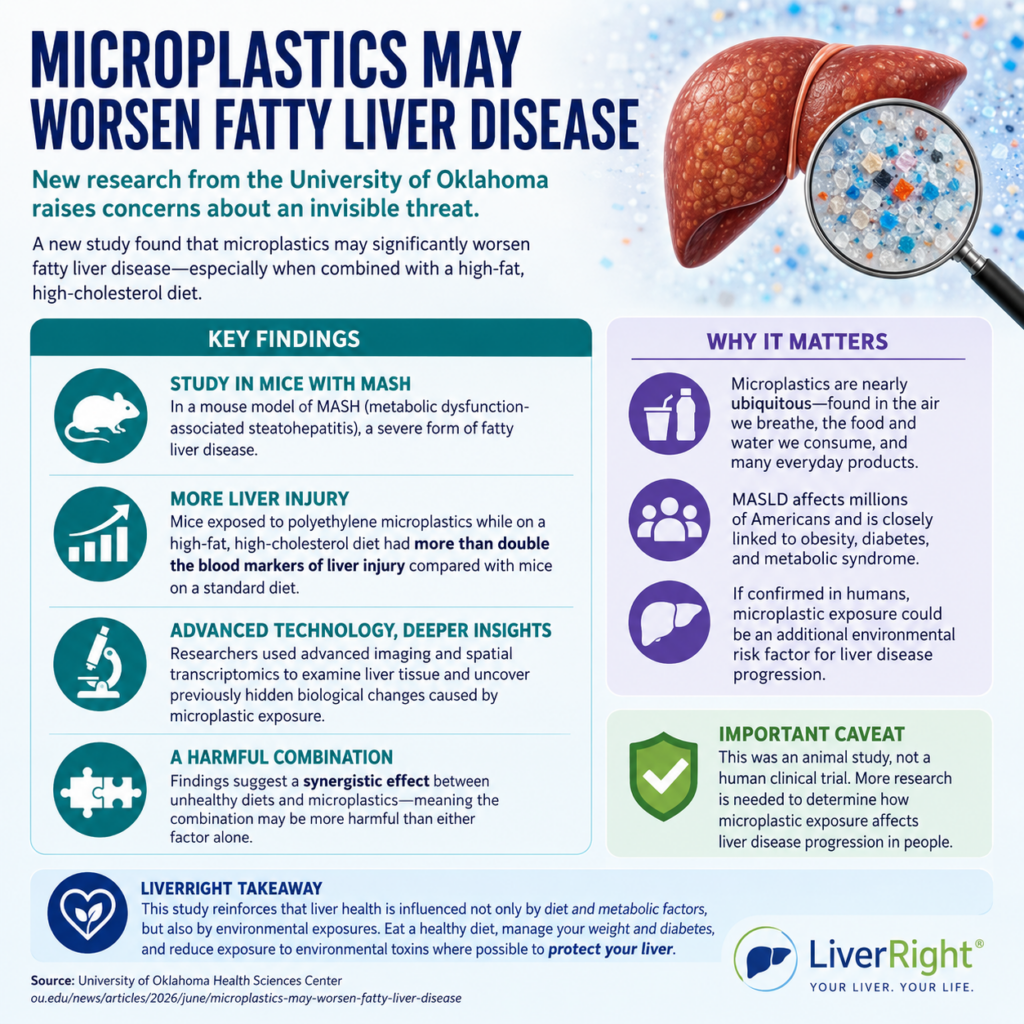
Researchers at the University of Oklahoma have found that microplastics may significantly worsen fatty liver disease, especially when combined with a high-fat, high-cholesterol diet. The findings were published in Science Advances and add to growing concerns about the health effects of plastic exposure.
Key Findings
- The study focused on polyethylene microplastics, the most common type of plastic found in products such as plastic bags, food packaging, and milk jugs.
- In a mouse model of MASH (metabolic dysfunction-associated steatohepatitis), a severe form of fatty liver disease, animals exposed to microplastics showed more than double the blood markers of liver injury compared with animals exposed to the same particles while eating a standard diet.
- Researchers used advanced imaging and spatial transcriptomics technology to examine liver tissue and identify damage at the cellular level. These techniques revealed previously hidden biological changes caused by microplastic exposure.
- The results suggest a synergistic effect between unhealthy diets and microplastics, meaning the combination may be more harmful than either factor alone.
Why It Matters
- Exposure to microplastics is nearly unavoidable because they are present in the air we breathe, the food and water we consume, and many everyday products.
- MASLD affects millions of Americans and is closely linked to obesity, diabetes, and metabolic syndrome. If future human studies confirm these findings, microplastic exposure could emerge as an additional environmental risk factor contributing to liver disease progression.
Important Caveat
- This was an animal study, not a human clinical trial. While the findings are concerning and biologically plausible, more research is needed to determine how microplastic exposure affects liver disease progression in people.
LiverRight Takeaway
The study reinforces a growing body of evidence that liver health is influenced not only by diet and metabolic factors but also by environmental exposures. For patients with MASLD/MASH, maintaining a healthy diet, controlling weight, managing diabetes, and reducing exposure to environmental toxins where possible remain important strategies for protecting liver health.