We just read the article titled “GLP-1-based treatments and long-term clinical outcomes in MASLD amongst older adults: a retrospective cohort study” from the 09/21/2026 edition of Age & Aging.
GLP-1 medicines were linked to fewer serious liver complications and deaths in adults 65 and older with fatty liver disease. The findings are encouraging, but the study cannot prove the medicines caused those improvements.
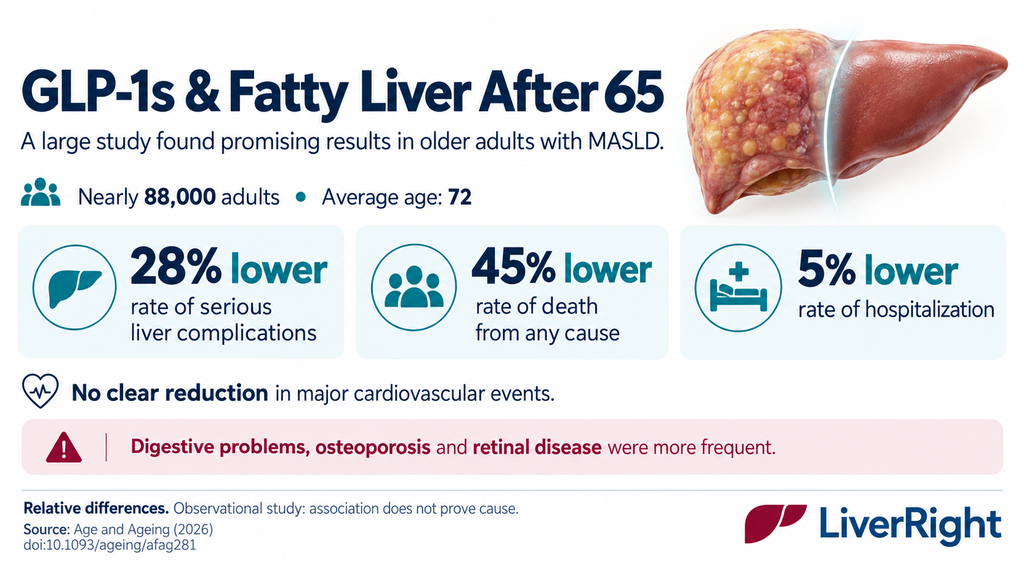
Researchers compared medical records for nearly 88,000 adults with MASLD—fatty liver disease associated with metabolic problems such as obesity or diabetes. Half started GLP-1 treatment; half were similar patients who did not. Their average age was about 72.
Compared with nonusers, people starting treatment had:
- 28% lower relative rate of serious liver complications, when the liver can no longer function adequately.
- 45% lower relative rate of death from any cause.
- 5% lower relative rate of hospitalization.
- No clear reduction in major cardiovascular events.
These percentages describe relative differences during follow-up, not the percentage of patients who avoided each outcome.
There were also potential downsides: digestive problems, osteoporosis without fractures, and damage to the eye’s retina were more frequent. Researchers found no clear difference in fractures, pancreatitis, or diagnosed muscle loss.
The main caution: this was a review of existing records, rather than a randomized trial. Even after matching patients, differences in their health or care could explain some of the results. The study supports GLP-1 treatment as a promising option for older adults with fatty liver disease, while highlighting the need to monitor side effects.