
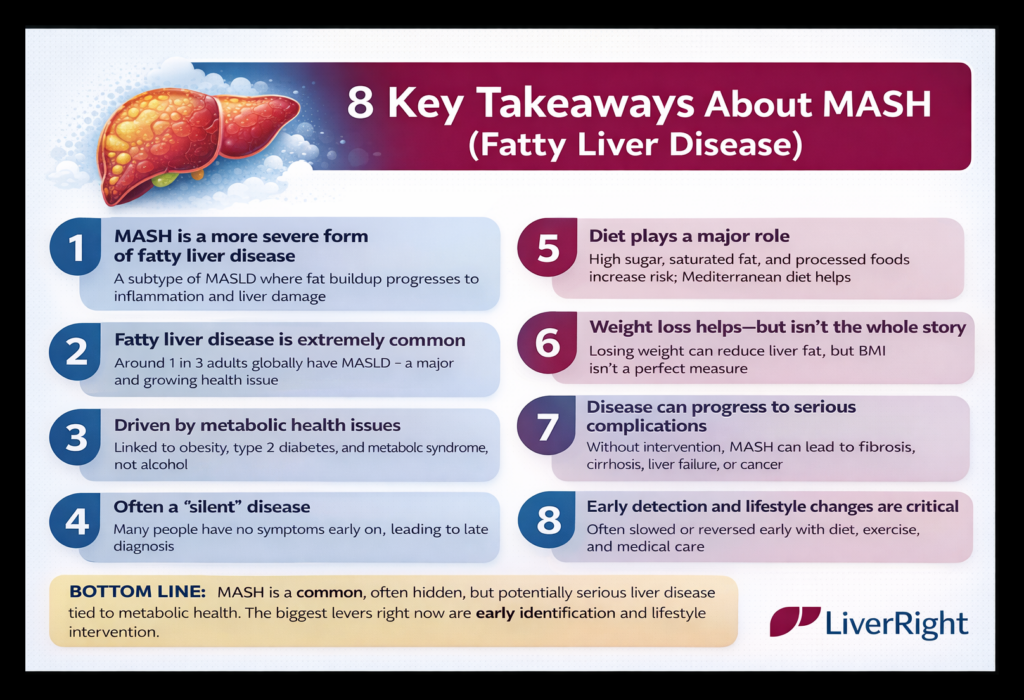
The article “8 takeaways about MASH, an increasingly common liver disease associated with obesity” from Managed Care Executive dated April 7, 2026, has a cogent analysis on MASLD/MASH.
Summarized–
8 Key Takeaways About MASH (Fatty Liver Disease)
- MASH is a more severe form of fatty liver disease
It’s a subtype of MASLD where fat buildup progresses to inflammation, liver cell damage, and scarring (fibrosis). - Fatty liver disease is extremely common
About one-third of adults globally have MASLD, making it a major and growing health issue. - Driven by metabolic health issues
MASH is closely linked to obesity, type 2 diabetes, and metabolic syndrome rather than alcohol use. - Often a “silent” disease
Many people have no symptoms early on, so it frequently goes undiagnosed until more advanced stages. - Diet plays a major role
Diets high in sugar (especially fructose), saturated fat, and processed foods increase risk, while a Mediterranean-style diet can help. - Weight loss helps—but isn’t the whole story
Losing weight can reduce liver fat, but BMI alone isn’t a perfect measure because it doesn’t capture harmful visceral fat. - Disease can progress to serious complications
Without intervention, MASH can lead to fibrosis, cirrhosis, liver failure, or cancer. - Early detection and lifestyle changes are critical
The condition can often be slowed or even reversed early with diet, exercise, and medical care.
Bottom line
MASH is a common, often hidden, but potentially serious liver disease tied to metabolic health. The biggest levers right now are early identification and lifestyle intervention, with emerging medications adding to the treatment landscape.