
This May 26, 2026 article cleverly titled “From Margin to Mainstream: Why Liver Health Should Sit at the Centre of the Global NCD Response” by Jeffrey Lazarus in Health Policy Watch is a call to (overdue) action.
Jeffrey Lazarus is the Professor of Global Health at CUNY SPH, head of the ISGlobal Public Health Liver Group and Director of the Steatotic Liver Think Tank.
Summary infographic–
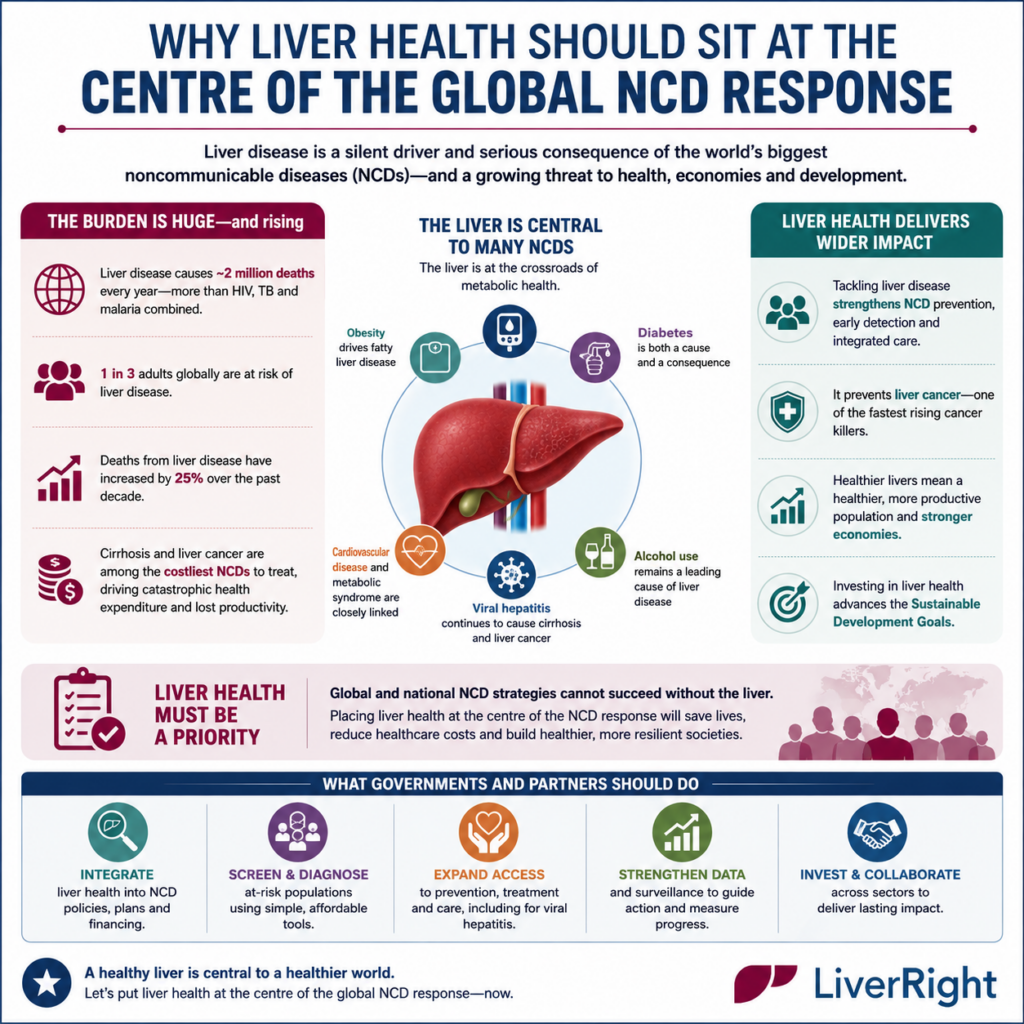
The article argues that liver health has become one of the most overlooked yet essential pillars of the global response to noncommunicable diseases (NCDs). While international health strategies have historically focused on cardiovascular disease, cancer, diabetes, and respiratory disease, liver disease is deeply interconnected with all of them and should no longer be treated as a separate or secondary issue.
A major focus is the growing burden of steatotic liver disease (formerly NAFLD, now MASLD/MASH), which is closely tied to obesity, diabetes, metabolic syndrome, poor diet, and sedentary lifestyles. The article notes that liver disease now affects more than 1.5 billion people globally and contributes to over 2 million deaths each year — exceeding the combined toll of HIV, tuberculosis, and malaria. Despite this enormous burden, liver disease has remained largely absent from global NCD frameworks and national health strategies.
The piece emphasizes that the liver sits at the center of metabolic health. Liver dysfunction both reflects and worsens broader chronic disease trends, increasing risks for cardiovascular disease, diabetes complications, cirrhosis, and liver cancer — one of the fastest-rising cancers worldwide. Because these diseases share the same drivers, the authors argue that integrating liver health into existing NCD prevention strategies would strengthen overall public health efforts rather than compete with them.
Another key theme is the urgent need for policy reform. Advocates and liver health organizations are calling on the WHO and UN to formally recognize liver disease as a core NCD priority. Doing so would encourage countries to include liver screening, surveillance, prevention, and treatment within national healthcare plans and universal health coverage initiatives. The article highlights growing momentum behind this movement, including international coalitions and proposed WHO resolutions aimed at integrating liver disease into the global NCD agenda.
Ultimately, the article presents liver disease as both a warning sign and an opportunity. Early detection and prevention are possible using relatively simple and affordable tools, but action requires political commitment, cross-sector collaboration, and investment in prevention-focused care. The central message is clear: without prioritizing liver health, the global effort to reduce premature deaths from chronic disease will fall short.