
Big Gilead news: “FDA Grants Accelerated Approval to Gilead’s Hepcludex® (bulevirtide-gmod), the First and Only Approved Treatment for Chronic Hepatitis Delta Virus (HDV)“.
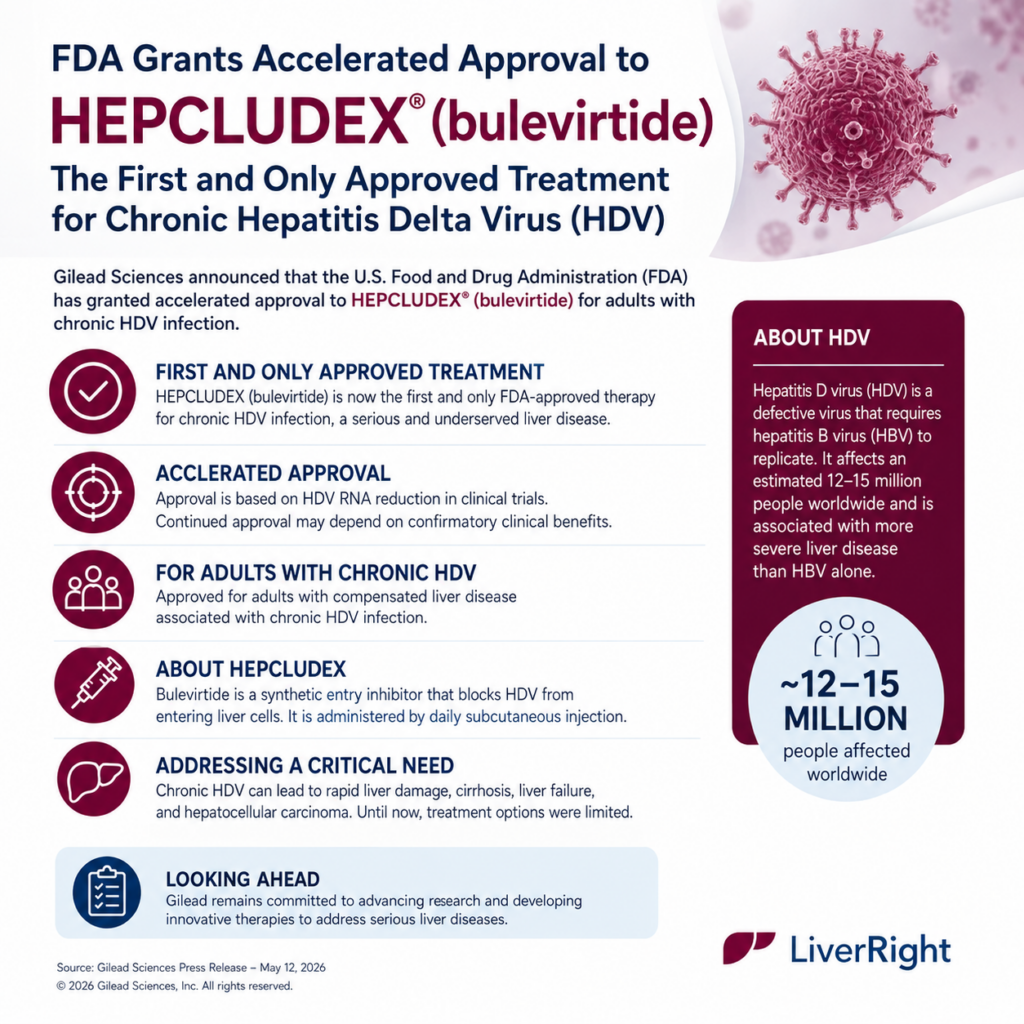
Gilead announced that the FDA has granted accelerated approval to Hepcludex (bulevirtide-gmod), making it the first and only FDA-approved treatment for chronic hepatitis delta virus (HDV) infection in adults with compensated liver disease. HDV is considered the most severe form of viral hepatitis and occurs only in people who also have hepatitis B.
Key takeaways
- Historic first approval in the U.S. for HDV
- Until now, there were no FDA-approved therapies specifically for chronic HDV.
- Hepcludex had already been approved in Europe before this U.S. approval.
- How Hepcludex works
- Bulevirtide is a first-in-class entry inhibitor.
- It blocks the NTCP receptor that HBV and HDV use to enter liver cells, helping prevent reinfection and viral spread in the liver.
- Approval basis
- The accelerated approval was supported by data from the Phase 3 MYR301 study and related clinical programs.
- Results showed meaningful reductions in HDV RNA and improvements in liver inflammation markers (ALT normalization).
- Durability data stood out
- Long-term follow-up from MYR301 suggested some patients maintained viral suppression even after stopping therapy.
- Among patients with prolonged undetectable HDV RNA during treatment, about 90% remained undetectable nearly two years after stopping therapy.
- Why this matters clinically
- Chronic HDV progresses faster than HBV alone and carries higher risks of cirrhosis, liver cancer, transplantation, and death.
- Experts view this approval as a major milestone because HDV has historically been underdiagnosed and lacked effective treatment options.
Strategic implications
For hepatology practices and liver programs, this approval likely increases momentum around:
- broader HDV screening among HBsAg-positive patients,
- referral pathways for specialty liver care,
- payer/access discussions,
- and clinical infrastructure for HDV management.
It also reinforces the growing importance of identifying advanced liver disease populations earlier, especially within HBV-positive cohorts.