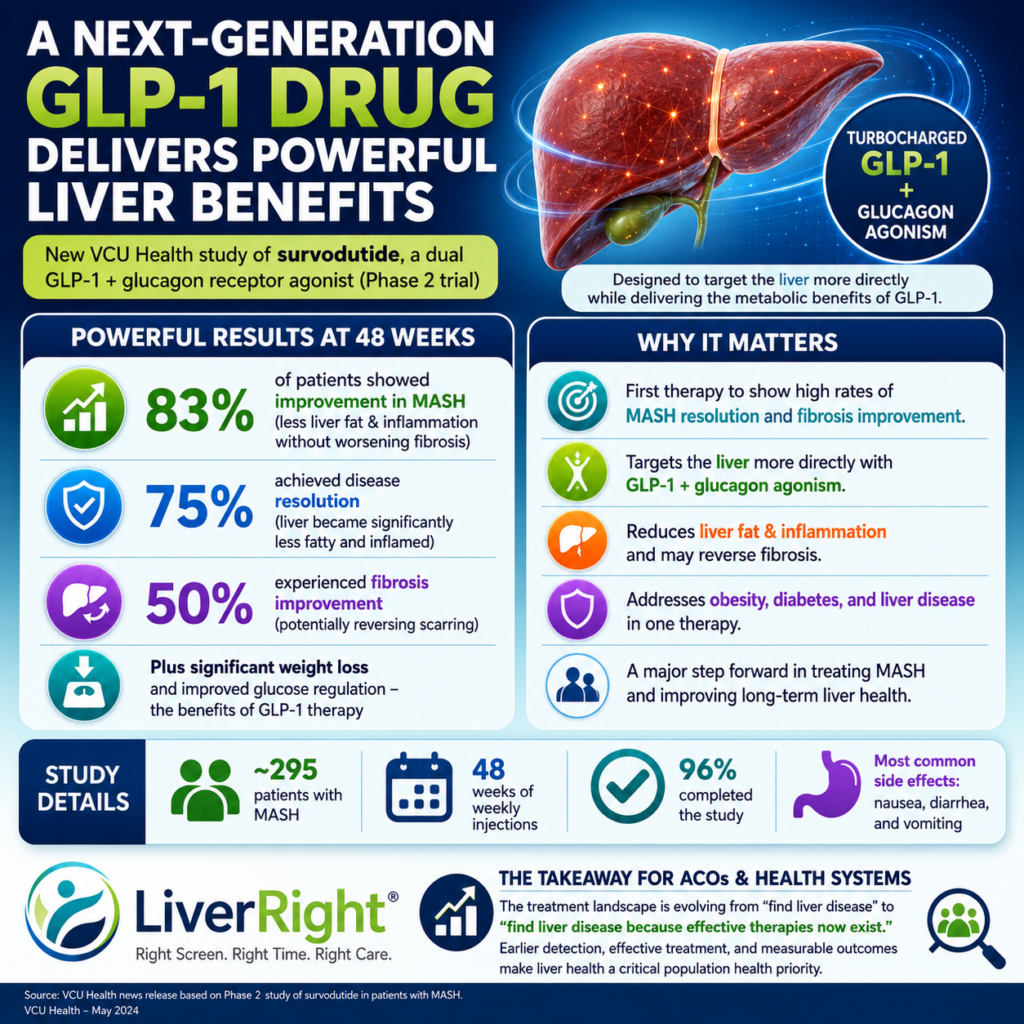
The article titled “New study reveals turbocharged GLP-1 drug helps shed body weight and fat in the liver” delineates a VCU Health report on survodutide, a next-generation obesity/liver disease drug that combines GLP-1 agonism (similar to Ozempic/Wegovy) with glucagon receptor agonism—essentially a “turbocharged” GLP-1 designed to target the liver more directly.
Key Findings
- 83% of patients showed improvement in MASH (fatty liver disease), including reductions in liver fat and inflammation without worsening fibrosis after 48 weeks of treatment.
- 75% achieved disease resolution, meaning their livers became significantly less fatty and inflamed.
- Up to 50% experienced fibrosis improvement, a particularly important finding because reversing liver scarring has historically been difficult.
- Participants also experienced the expected metabolic benefits of GLP-1 therapies, including weight loss and improved glucose regulation.
Why It Matters
Traditional GLP-1 drugs primarily work through appetite suppression and weight loss. Survodutide adds glucagon agonism, which appears to:
- Increase energy expenditure,
- Reduce liver fat more directly,
- Potentially improve fibrosis in addition to reducing steatohepatitis.
Dr. Arun Sanyal of VCU described the results as potentially a “game-changer” because a single medication may address both obesity and the liver disease itself.
Study Details
- Phase 2 trial
- ~295 patients with MASH and varying degrees of fibrosis
- 96% completed the study
- Weekly injections for 48 weeks
- Most common side effects were the familiar GLP-1 gastrointestinal effects: nausea, diarrhea, and vomiting.
Relevance for LiverRight
The most important takeaway for ACOs, health systems, and population health programs is that the treatment landscape is rapidly evolving from “find liver disease” to “find liver disease because effective therapies now exist.”
The study strengthens the business case for MASLD/MASH screening because:
- Disease can now be identified earlier.
- Effective pharmacologic interventions are emerging.
- Fibrosis improvement is becoming a realistic treatment goal.
- The same patients often have diabetes, obesity, hypertension, and cardiovascular disease—making liver screening highly relevant to value-based care programs.
For ACO audiences, the headline is not just “weight loss drug reduces liver fat” but rather “a dual-agonist therapy demonstrated both MASH resolution and fibrosis improvement, suggesting liver disease may become a treatable, measurable population health target.”
Here’s an infographic, sourced from the article;