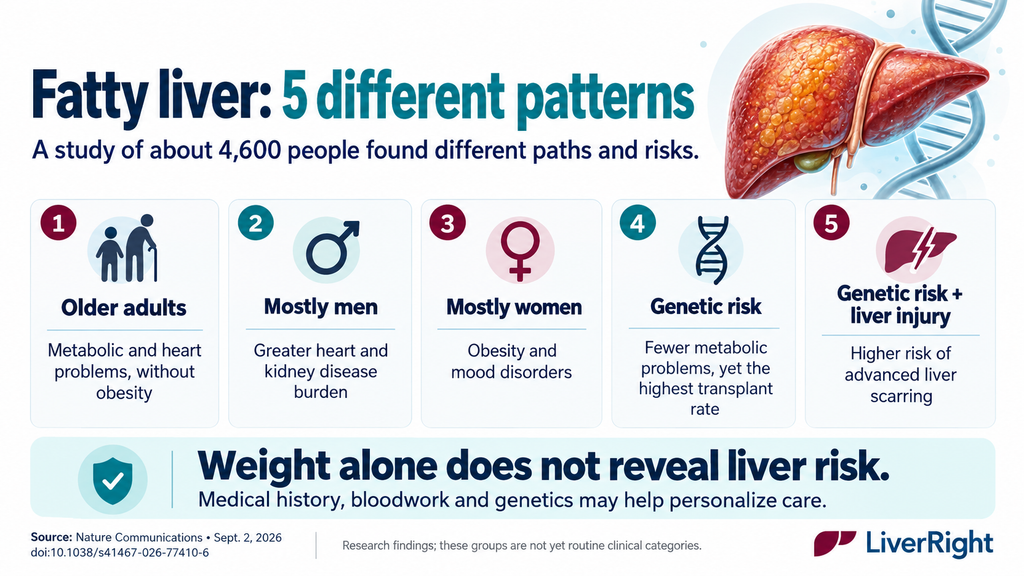
Fatty liver disease can follow very different paths—and someone’s weight or diabetes status may not reveal how serious their liver risk is. That is the main message of this study from Mayo Clinic and Virginia Tech. Researchers analyzed medical records and genetic information from about 4,600 people with metabolic dysfunction–associated steatotic liver disease (MASLD), identifying five distinct patient groups.
Those groups included older adults without obesity but with metabolic and heart problems; mostly men with substantial heart and kidney disease; mostly women with obesity and mood disorders; and two groups with stronger inherited susceptibility to liver disease. One of those genetic groups had relatively few typical metabolic problems yet the highest overall rate of liver transplantation. The other had more signs of liver injury and greater risk of advanced scarring and sudden kidney failure.
The practical takeaway: appearing metabolically healthier does not necessarily mean the liver is safe. The findings suggest that combining a person’s medical history, bloodwork and genetics could eventually help doctors identify who needs closer monitoring and tailor treatment more precisely. They also reinforce that fatty liver disease can involve the heart, kidneys and other aspects of health.
These five groups are still a research framework. This observational study found patterns; it did not prove what causes them or establish which treatment works best for each group. Broader validation is needed before this approach becomes routine care.