
This 08/12/2026 article titled “Energy Drink-Associated Mixed Liver Injury With Cholestatic Histology After Long-Term High-Volume Consumption: A Case Report” is a case report of probable energy drink–associated drug-induced liver injury (DILI) after prolonged, very high-volume consumption. The clinically interesting feature is that the injury was mixed hepatocellular/cholestatic biochemically, with predominantly cholestatic injury on liver biopsy.
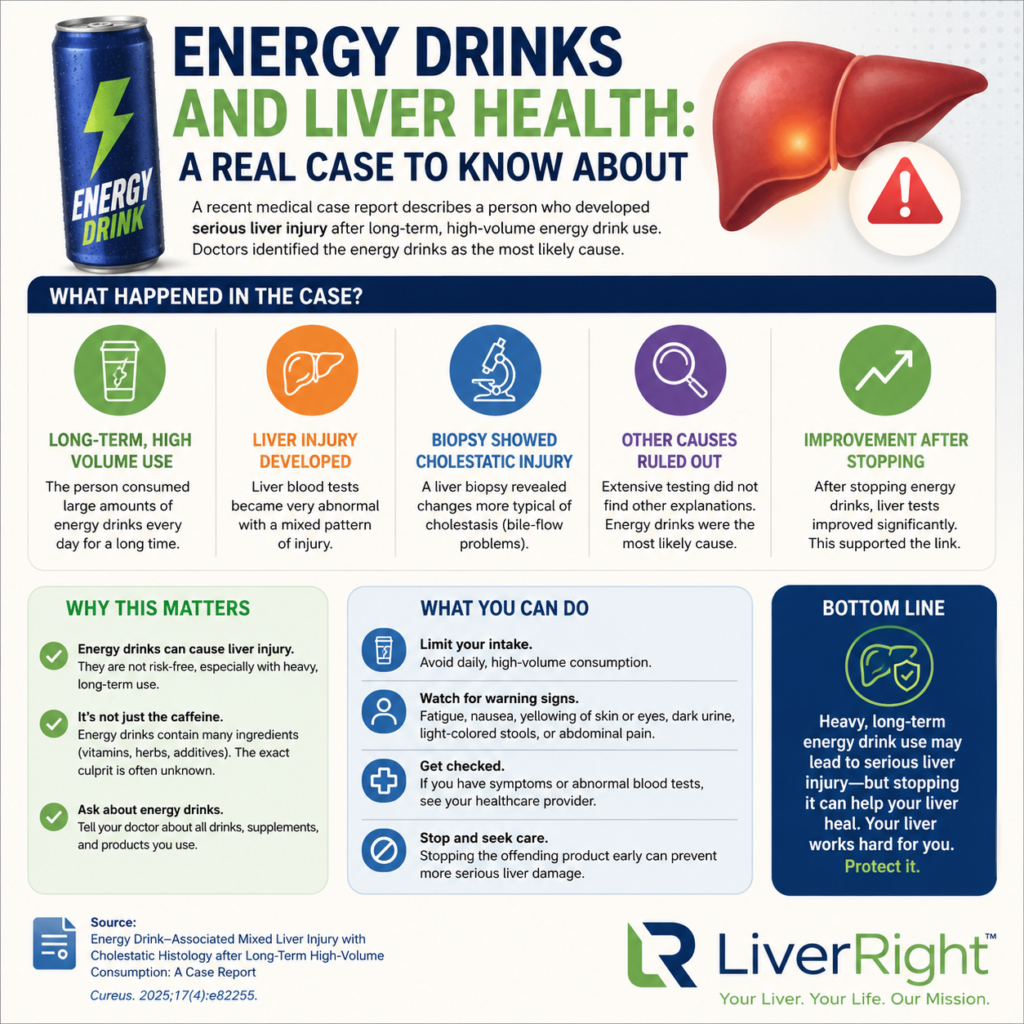
Key takeaways
- Exposure: The patient had a history of long-term, high-volume energy drink consumption, rather than a short-term overdose. The authors argue that chronic exposure to the combination of ingredients in energy drinks can potentially produce clinically important hepatotoxicity.
- Presentation: The patient developed significant liver-test abnormalities consistent with a mixed pattern of liver injury. The evaluation considered and excluded competing causes sufficiently for the authors to regard the energy drinks as the most likely culprit.
- Biopsy matters: Histology demonstrated prominent cholestatic changes, strengthening the case for a toxic/drug-induced process and showing that energy-drink injury does not necessarily present as straightforward hepatocellular hepatitis.
- Mechanism isn’t established. Energy drinks contain multiple compounds—caffeine, vitamins, herbal ingredients and other additives—making it difficult to identify a single hepatotoxin. Niacin (vitamin B3) has been implicated in previous energy-drink liver-injury reports, but the authors cannot establish that one ingredient caused this case.
- Clinical course: Withdrawal of the suspected offending energy drinks was central to management, with subsequent improvement supporting the causal association.
Why the paper is noteworthy
Most clinicians don’t routinely think of energy drinks as a potential source of DILI. This case reinforces the importance of asking specifically about energy drinks, supplements, vitamins, pre-workout products and other nonprescription products when evaluating unexplained elevations in liver enzymes or cholestasis.
The other important point is dose and duration. The paper shouldn’t be interpreted as evidence that ordinary consumption of an occasional energy drink causes liver disease. It’s a single case report, so it establishes a plausible association rather than incidence, population-level risk, or causality. The unusual exposure—sustained, high-volume consumption—is therefore an important part of the story.
Bottom line
Heavy, chronic energy-drink consumption should be included in the differential diagnosis of otherwise unexplained liver injury. A careful dietary/supplement history may uncover an exposure patients don’t think of as a “drug,” and stopping that exposure can be both diagnostic and therapeutic.
At LiverRight, we ask: “What are you drinking?” and “What medications and supplements are you taking?,” when we see an abnormal-LFT history.
[LFT stands for liver function tests.
It’s a common shorthand for a group of blood tests used to assess liver injury and liver/bile-duct function, including ALT, AST, alkaline phosphatase, bilirubin, albumin, and sometimes GGT.]