
Here’s a summary of the article “Simple blood test predicts liver disease years before symptoms,” from ScienceDaily.
First: A CORE blood test refers to the newly developed Cirrhosis Outcome Risk Estimator (CORE), a risk score that predicts the 10-year risk of severe liver disease by combining age, sex, and levels of liver enzymes AST, ALT, and GGT. This simple score, which can be used in primary care, outperforms the previous FIB-4 score in predicting liver-related outcomes like cirrhosis, its complications, or liver cancer.
Key Takeaways
- Researchers from Karolinska Institutet (Sweden) and collaborators in Finland have developed a predictive model called CORE that can estimate an individual’s 10-year risk of severe liver disease (e.g. cirrhosis, liver cancer) using routine blood tests + basic demographic data.
- The CORE model uses 5 input variables:
- Age
- Sex
- AST (aspartate aminotransferase)
- ALT (alanine aminotransferase)
- GGT (gamma-glutamyl transferase)
These are common liver enzyme tests typically ordered in routine panels.
- The goal is for it to be usable in primary care settings, where many patients are first seen, enabling earlier detection of liver disease risk. A web-based calculator is already available (www.core-model.com).
- In validation:
- The model was trained on a Swedish cohort of ~480,000 individuals who had health checks from 1985 to 1996, with follow-up of up to 30 years. ~1.5 % went on to develop severe liver disease (cirrhosis, liver cancer, or required liver transplant).
- The model achieved 88 % accuracy in distinguishing who would vs. would not develop the disease—this is better than the commonly used FIB-4 method in general populations.
- It was further tested in Finnish and UK population cohorts, where it again showed strong predictive performance.
- The authors note that FIB-4, which is sometimes recommended, is not well suited for general population screening (i.e. many low-risk individuals), whereas CORE is designed for broader use.
- They acknowledge limitations / next steps:
- The model should be tested in higher-risk subgroups (e.g. people with obesity, type 2 diabetes).
- Integration into electronic health record (EHR) systems would help adoption in clinical practice.
Implications (big)
- If adopted, CORE could provide a low-cost, scalable screening tool in primary care to flag individuals at higher risk of serious liver disease before symptoms or advanced disease develop.
- It might help target which patients would benefit from more advanced imaging / elastography / further diagnostics earlier, potentially improving outcomes and reducing late detection.
- It could shift the paradigm of liver disease management, especially in populations not already identified as high risk.
Last, a good snapshot of the “Current State” that CORE could disrupt–
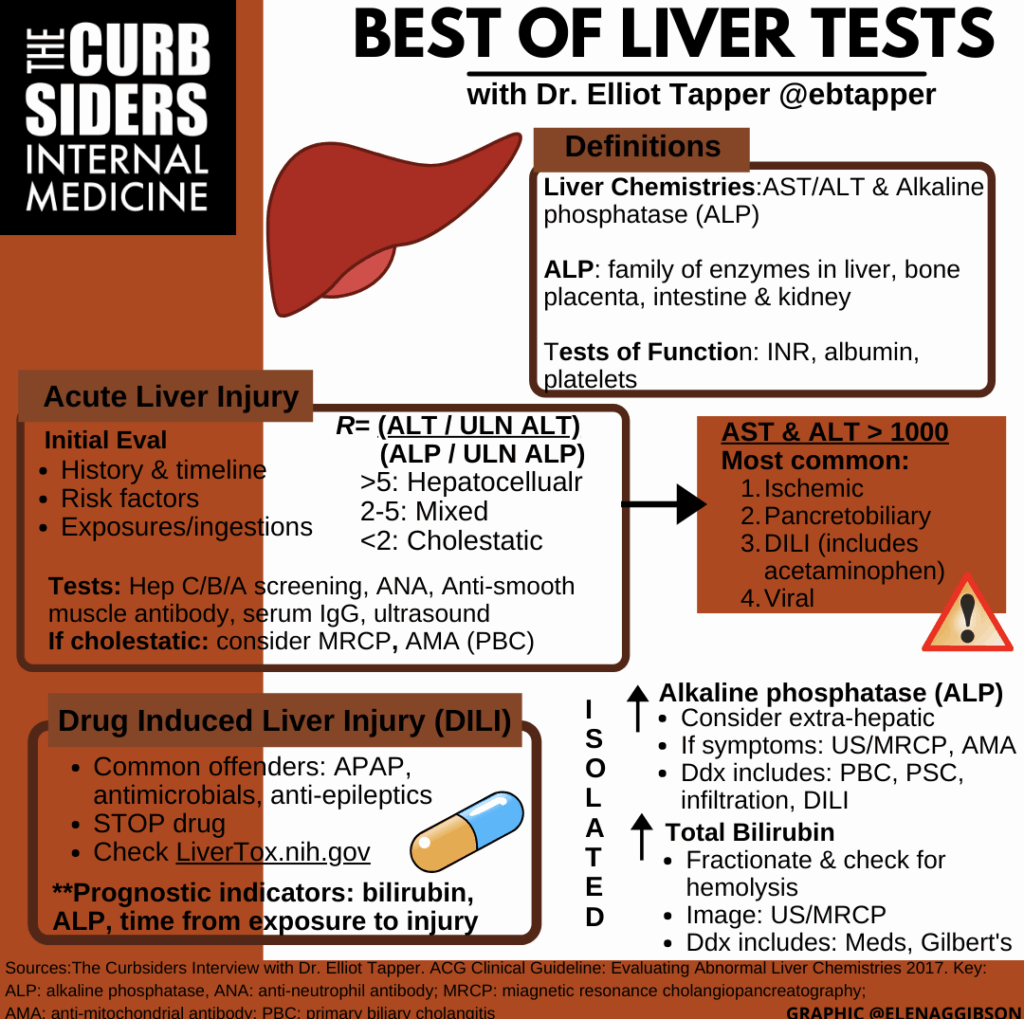
IMAGE SOURCE: Curbsiders Interview with Dr. Elliot Tapper.