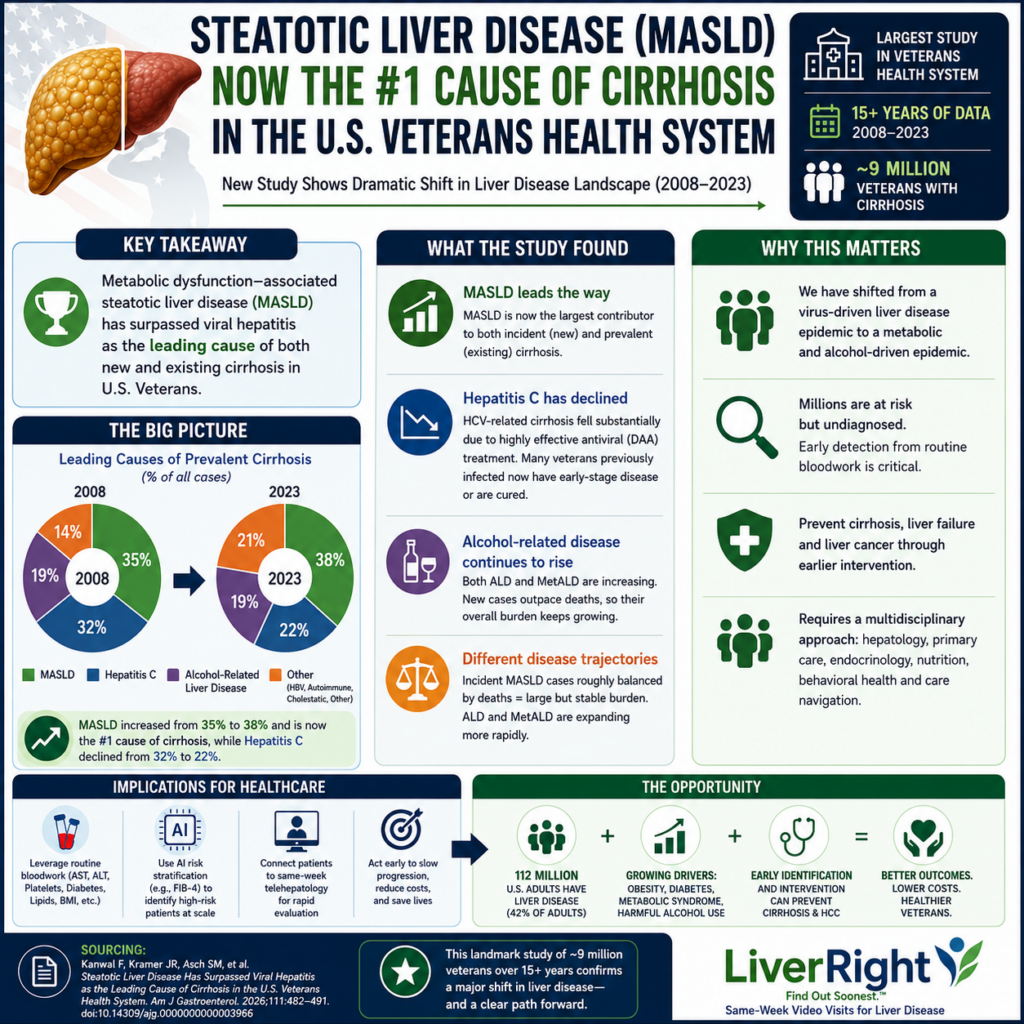
The paper “Steatotic Liver Disease Has Surpassed Viral Hepatitis as the Leading Cause of Cirrhosis in the U.S. Veterans Health System“ (American Journal of Gastroenterology, 2026) analyzed all U.S. Veterans Health Administration patients with cirrhosis from 2008–2023 and documents one of the biggest epidemiologic shifts in modern hepatology.
Summary
Bottom line: Metabolic liver disease (MASLD) is now the #1 cause of cirrhosis in the U.S. Veterans Health System, overtaking viral hepatitis, while alcohol-related liver disease is also rising rapidly.
Key Findings
- MASLD is now the leading cause of cirrhosis
- Metabolic dysfunction-associated steatotic liver disease (MASLD) has become the largest contributor to both new (incident) and existing (prevalent) cirrhosis cases.
- This reflects the growing impact of obesity, diabetes, and metabolic syndrome.
- Hepatitis C has declined substantially
- HCV-related cirrhosis has fallen because of widespread use of highly effective direct-acting antiviral (DAA) therapy.
- Despite this decline, HCV still accounts for a significant number of patients living with cirrhosis because many developed advanced disease before being cured.
- Alcohol-related liver disease remains a growing problem
- Both ALD and MetALD (combined metabolic dysfunction and alcohol use) continue to increase.
- New ALD and MetALD cases outpaced deaths, meaning their overall burden is still growing.
- MASLD behaves differently than ALD
- Incident MASLD cases were roughly balanced by deaths, suggesting a mature but persistently large disease burden.
- In contrast, ALD and MetALD are expanding more rapidly.
Why This Matters
The study illustrates the transition from a liver disease landscape dominated by viral hepatitis to one dominated by metabolic disease and alcohol.
That means healthcare systems increasingly need to:
- Identify patients from routine laboratory data before cirrhosis develops.
- Aggressively manage obesity, diabetes, and metabolic syndrome.
- Address alcohol use disorder alongside metabolic disease.
- Expand multidisciplinary care models that combine hepatology, primary care, endocrinology, nutrition, behavioral health, and care navigation.