Summary: Quality of Life Remains Stable in Autoimmune Liver Disease (EMJ Hepatology, June 2026)
Key Findings
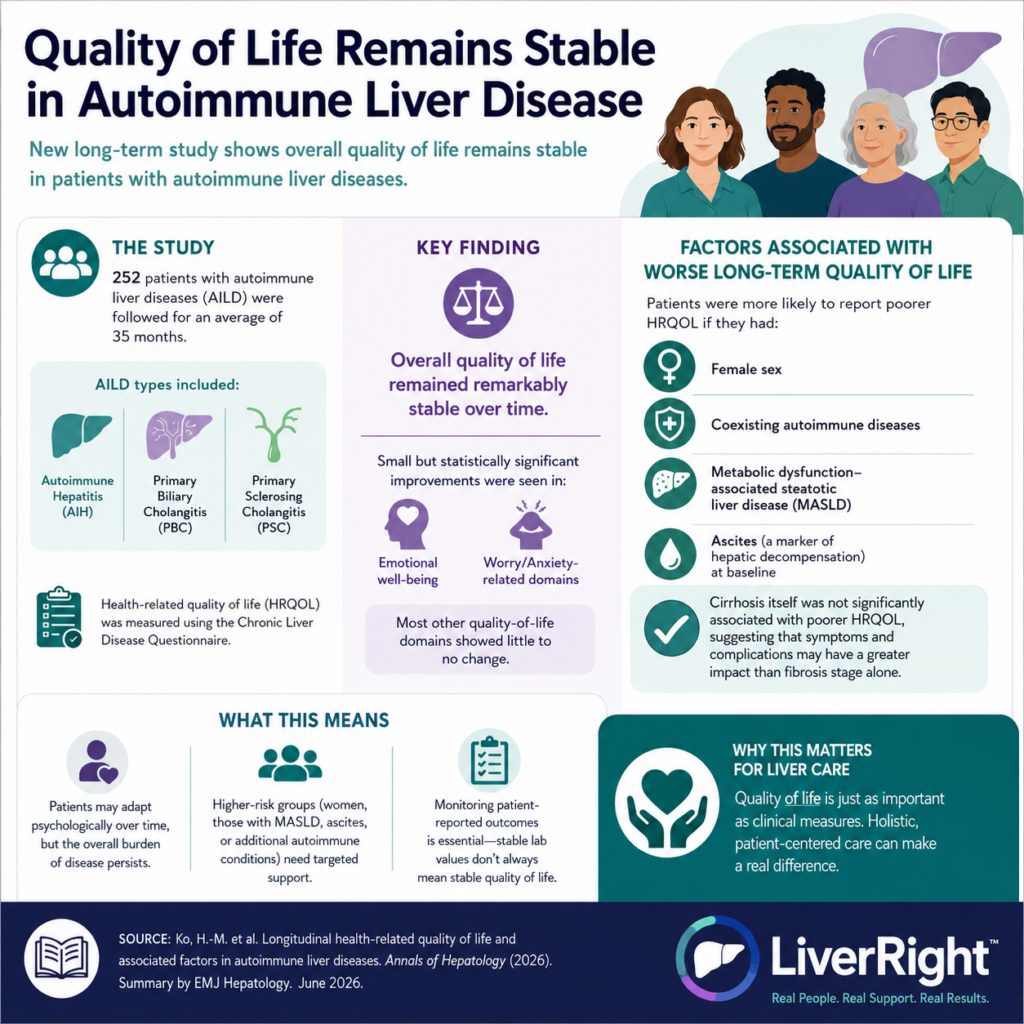
- Overall quality of life remained remarkably stable over time, despite the chronic nature of these diseases.
- There were small but statistically significant improvements in:
- Emotional well-being
- Worry/anxiety-related domains
These changes were modest and may not be clinically meaningful.
- Most other quality-of-life domains showed little to no change over the follow-up period.
Factors Associated with Worse Long-Term Quality of Life
Patients were more likely to report poorer HRQOL if they had:
- Female sex
- Coexisting autoimmune diseases
- Metabolic dysfunction–associated steatotic liver disease (MASLD)
- Ascites (a marker of hepatic decompensation) at baseline
Interestingly:
- Cirrhosis itself was not significantly associated with poorer HRQOL, suggesting that symptoms and complications may have a greater impact on patient experience than fibrosis stage alone.
Clinical Implications
The study suggests that patients with autoimmune liver disease may develop some degree of psychological adaptation over time, but the overall burden of disease persists. The findings highlight the importance of:
- Monitoring patient-reported outcomes, not just laboratory values
- Providing targeted support for higher-risk groups (especially women, patients with MASLD, ascites, or additional autoimmune conditions)
- Incorporating quality-of-life measures into long-term disease management strategies
Why This Matters for our National Clinic LiverRight
For a virtual liver disease model like LiverRight, these findings reinforce that:
- Disease control alone may not fully address patient burden.
- Identifying and supporting patients with comorbid MASLD and autoimmune liver disease could have a meaningful impact on outcomes.
- Routine collection of patient-reported outcome measures (PROMs) may help identify patients whose quality of life is declining despite stable liver disease markers.
Reference: Ko et al. Longitudinal health-related quality of life and associated factors in autoimmune liver diseases, Annals of Hepatology (2026).