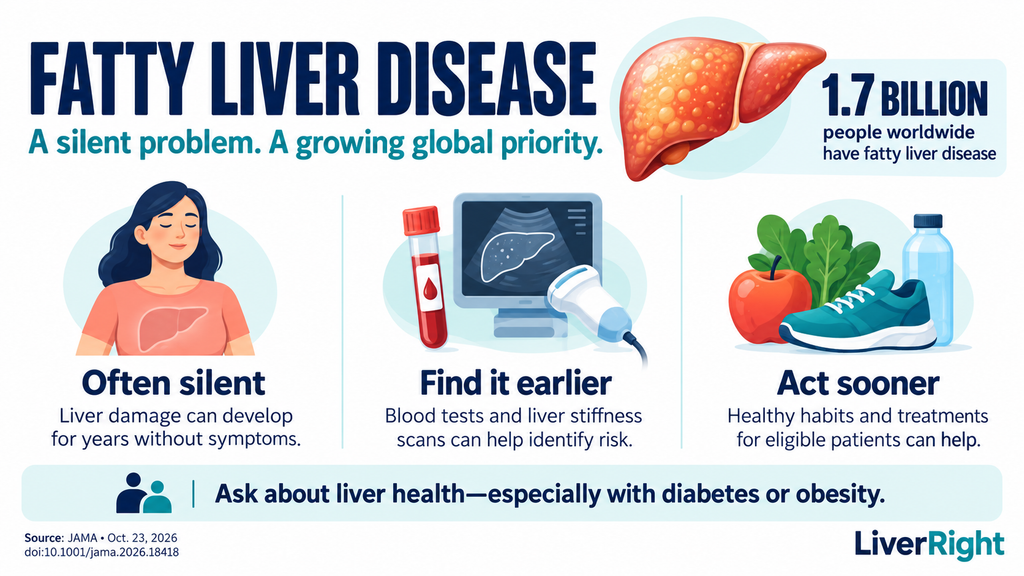
Fatty liver disease is widespread, often silent, and finally getting more attention worldwide. This 10/23/2026 JAMA news article titled “Steatotic Liver Disease Is Becoming a Higher Priority Worldwide” explains why providers need to find it earlier, before serious liver damage develops.
The main points:
- The problem is enormous. An estimated 1.7 billion people worldwide have steatotic—or fatty—liver disease. Obesity, diabetes, and alcohol contribute to the burden.
- People can feel fine for decades. Liver damage may progress without symptoms, so diagnosis often comes only after severe scarring, called cirrhosis, or liver cancer.
- Routine care often overlooks the liver. Patients with diabetes regularly have their eyes, kidneys, and feet checked, but liver scarring receives less attention.
- Finding it earlier is becoming easier. Blood-based scores such as FIB-4 can flag risk using routine lab results. They miss some cases, however; newer scores, specialized blood tests, and liver stiffness scans can help.
- Treatment offers a reason to act. Weight loss, exercise, and reduced alcohol intake can help prevent progression. Rezdiffra and Wegovy are also available for certain patients with MASH—the inflammatory form—with moderate to advanced scarring.
- Policy is catching up. The World Health Assembly adopted its first resolution specifically addressing fatty liver disease.