

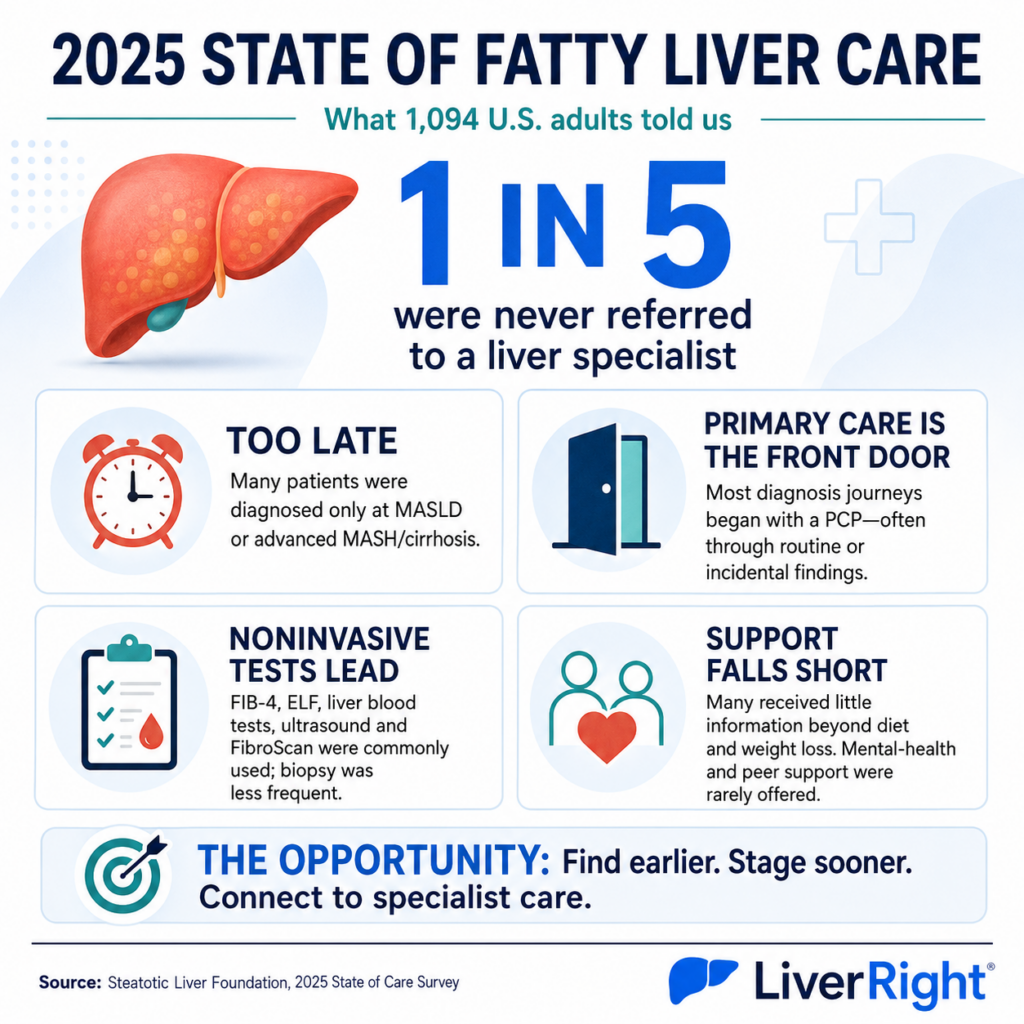
The 2025 State of Steatotic Liver Care survey from the Steatotic Liver Foundation paints a clear picture: liver disease is still being detected too late, and many diagnosed patients never receive specialist care, adequate education, or comprehensive support.
The national survey included 1,094 U.S. adults with steatotic liver disease and was conducted from April through September 2025. It was the fourth annual survey.
Key findings:
- Late diagnosis remains common. Respondents were disproportionately diagnosed either with MASLD or only after progressing to stage F4 MASH/cirrhosis. Many did not know their fibrosis stage at all.
- Primary care is the main front door. Most diagnoses began with a PCP—during routine care, after symptoms, or incidentally while investigating something else.
- Noninvasive testing is becoming central. Liver-function testing, FIB-4, ELF, ultrasound, and FibroScan were the most commonly reported diagnostic tools. Biopsy was used considerably less often.
- The referral system is unreliable. Although many patients reached a gastroenterologist or hepatologist within three months, approximately 1 in 5 was never referred.
- Patients receive too little explanation. Most respondents said they were given little or no useful information when diagnosed, although the trend appears to be improving.
- Support often stops at “diet and weight loss.” Lifestyle advice was the dominant intervention, frequently coupled with management of diabetes, obesity, or other conditions. Many patients reported receiving no specific disease-management help.
- Mental-health needs are largely overlooked. Fatigue, anxiety, depression, and irritability were common, but few patients were offered mental-health or peer-support resources.
- Clinical-trial participation remains very low despite the expanding pipeline of MASH therapies.
This survey strongly validates a model built around EMR identification, automatic FIB-4 staging, and rapid specialist access. The most commercially useful statistic is probably:
Roughly 20% of diagnosed patients reported never receiving a specialist referral.
It also supports our positioning LiverRight as more than an appointment-access solution:
Find the patient earlier → establish fibrosis stage → provide a same-week liver visit → explain the diagnosis → initiate longitudinal metabolic, medication, and behavioral management.
Sources: 2025 survey findings and the Foundation’s 2022–2025 AASLD survey summary.