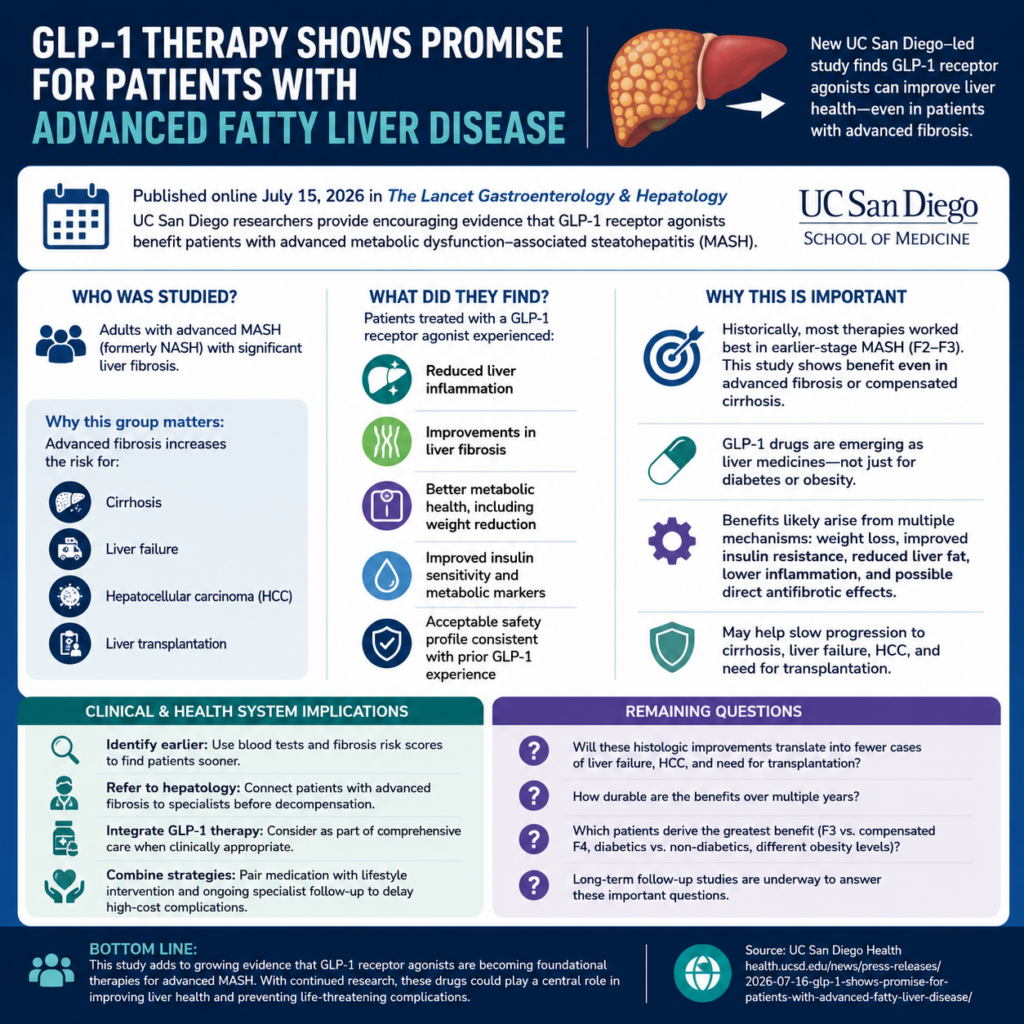
A new UC San Diego-led study titled “GLP-1 Shows Promise for Patients with Advanced Fatty Liver Disease” provides encouraging evidence that GLP-1 receptor agonists may benefit patients with advanced metabolic dysfunction–associated steatohepatitis (MASH), even among those who already have significant liver fibrosis—a group with historically limited treatment options. The findings were published online in The Lancet Gastroenterology & Hepatology on July 15, 2026.
Key findings
- Population studied: Patients with advanced MASH (formerly NASH), characterized by significant liver fibrosis and elevated risk for cirrhosis, liver failure, hepatocellular carcinoma (HCC), and liver transplantation.
- Therapy evaluated: A GLP-1 receptor agonist (the UCSD press release emphasizes the drug class rather than simply weight loss alone).
- Results: Patients receiving GLP-1 therapy experienced:
- Reduced liver inflammation
- Improvements in liver fibrosis
- Better metabolic health, including weight reduction
- An acceptable safety profile consistent with prior GLP-1 experience
Why this matters
Historically, most therapies have shown their greatest effect in patients with earlier-stage MASH (F2–F3 fibrosis). Patients with advanced fibrosis or compensated cirrhosis have had relatively few proven pharmacologic options.
This study suggests GLP-1 therapy may still provide meaningful benefit even after substantial fibrosis has developed, potentially slowing progression toward:
- Cirrhosis
- Liver decompensation
- Liver transplantation
- Hepatocellular carcinoma (HCC)
Clinical implications
The results reinforce a broader shift in hepatology:
- GLP-1 drugs are becoming liver medicines, not just diabetes or obesity drugs.
- Their benefits likely arise from several mechanisms:
- Sustained weight loss
- Improved insulin resistance
- Reduced hepatic fat accumulation
- Lower systemic and hepatic inflammation
- Possible direct antifibrotic effects
What this means for health systems and payers
For organizations managing populations with MASLD/MASH, the study supports:
- Earlier identification of patients using blood tests and fibrosis risk scores.
- Referral of patients with advanced fibrosis to hepatology before decompensation.
- Broader integration of GLP-1 therapy into liver disease care pathways when clinically appropriate.
- Combining pharmacotherapy with lifestyle intervention and longitudinal specialist follow-up to delay high-cost complications.
Remaining questions
Although the findings are promising, researchers note that important questions remain:
- Will these histologic improvements translate into fewer cases of liver failure, HCC, and transplantation?
- How durable are the benefits over multiple years?
- Which patients derive the greatest benefit (F3 vs. compensated F4, diabetics vs. non-diabetics, differing obesity levels)? Ongoing long-term follow-up studies are intended to answer these questions.
Bottom line
This study adds to the growing body of evidence that GLP-1 receptor agonists are emerging as foundational therapies for advanced MASH, extending their role beyond diabetes and obesity management. If longer-term outcome studies confirm reductions in liver-related complications, these agents could become a central component of care for patients with advanced fatty liver disease, alongside fibrosis assessment, HCC surveillance, and specialist management.