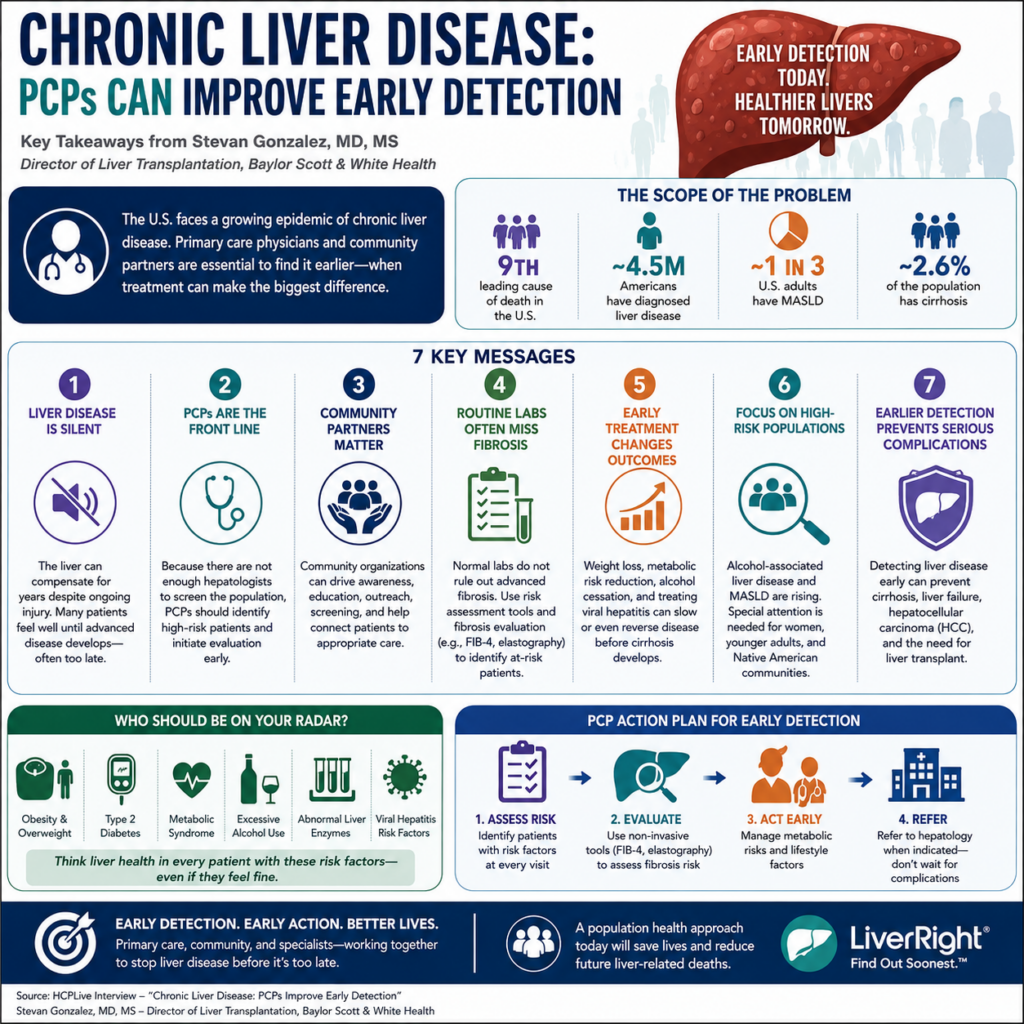
Give this article a read: “Chronic Liver Disease: How PCPs Can Improve Early Detection.”
This HCPLive interview with Stevan Gonzalez, MD, MS (Director of Liver Transplantation at Baylor Scott & White Health) is less of a research paper and more of a call to action. The central message is that the United States will not solve chronic liver disease through hepatologists alone—primary care must become the front line for early detection.
Executive Summary
1. Chronic liver disease is far more common than many clinicians realize
Dr. Gonzalez highlights that chronic liver disease has become a major public health problem in the U.S.
Key statistics include:
- Chronic liver disease is the 9th leading cause of death in the U.S.
- Approximately 4.5 million Americans have diagnosed liver disease.
- Roughly one-third of U.S. adults have MASLD.
- Cirrhosis affects approximately 2.6% of the population.
2. Liver disease is usually “silent”
One of the greatest challenges is that patients often feel completely well.
The liver can compensate for years despite ongoing injury.
Many patients are only diagnosed after developing:
- cirrhosis
- portal hypertension
- liver failure
- hepatocellular carcinoma (HCC)
By then, damage may be irreversible.
3. Primary care physicians are the key to earlier diagnosis
Because there are far too few hepatologists to screen the population, PCPs should identify patients with:
- obesity
- type 2 diabetes
- metabolic syndrome
- excessive alcohol use
- abnormal liver enzymes
- viral hepatitis risk factors
Earlier recognition allows intervention before cirrhosis develops.
4. Community organizations should participate
The article argues that early detection should extend beyond physicians.
Community organizations can help with:
- education
- awareness
- screening initiatives
- connecting high-risk patients with care
This shifts liver disease toward a population health model rather than a specialty referral model.
5. Current testing often misses fibrosis
Routine chemistry panels do not reliably identify liver fibrosis.
Instead, patients need:
- risk assessment
- fibrosis evaluation
- appropriate imaging or elastography
- referral when indicated
Waiting until symptoms develop is often too late.
6. Early treatment changes outcomes
When disease is detected early, interventions such as:
- weight loss
- treatment of MASLD
- alcohol cessation
- hepatitis B treatment
- hepatitis C cure
- metabolic risk reduction
can slow or even reverse disease progression before permanent scarring develops.
7. Certain populations deserve particular attention
Dr. Gonzalez notes increasing rates of:
- alcohol-associated liver disease
- MASLD
He also highlights disproportionately affected populations including:
- women
- younger adults
- Native Americans
These groups may benefit from targeted outreach and screening.