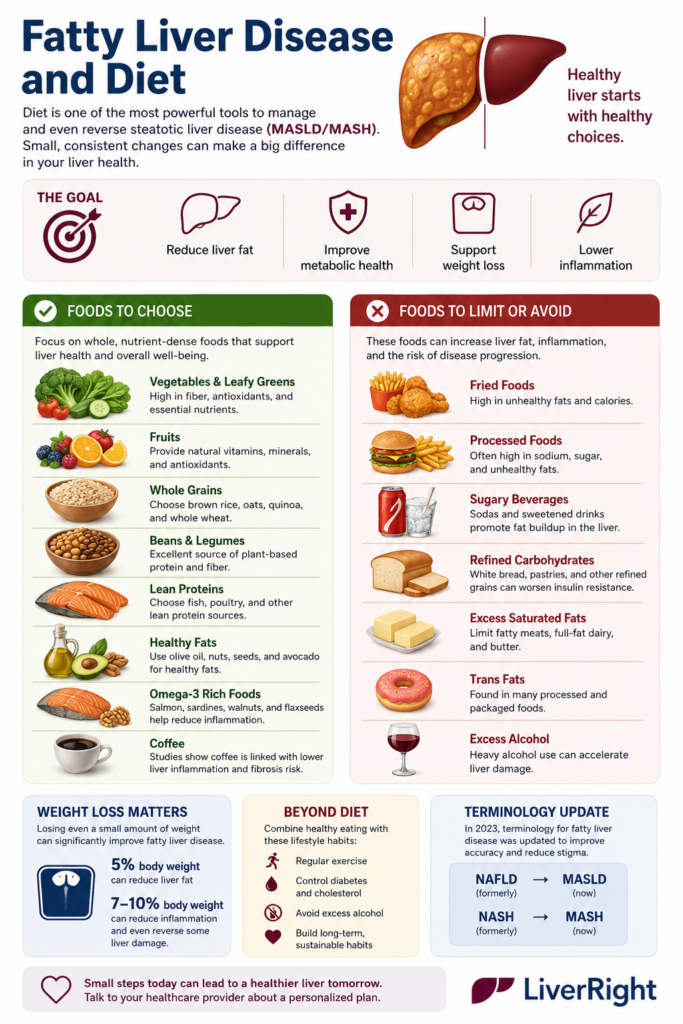
The Liver Disease News article “Steatotic liver disease and diet: Foods to eat and avoid” of March 4, 2026, by Marisa Wexler, MS has news you can use.
Key Takeaways
- Fatty liver disease develops when excess fat accumulates in the liver, often linked to obesity, diabetes, high cholesterol, insulin resistance, and poor diet.
- The primary goal of dietary treatment is to:
- reduce liver fat,
- improve metabolic health,
- support weight loss when needed,
- and lower inflammation.
Foods Recommended
The article strongly supports a Mediterranean-style diet, which is consistently associated with improved liver health. Recommended foods include:
- Vegetables and leafy greens
- Fruits
- Whole grains
- Beans and legumes
- Lean proteins (fish, poultry)
- Healthy fats like olive oil, nuts, avocado
- Omega-3 rich foods (salmon, sardines, walnuts)
- Coffee (linked with lower liver inflammation and fibrosis risk)
These foods provide:
- antioxidants,
- fiber,
- anti-inflammatory compounds,
- and healthier fat profiles that support liver function.
Foods to Limit or Avoid
The article recommends reducing foods that worsen liver fat accumulation and metabolic dysfunction, including:
- Fried foods
- Processed foods
- Sugary beverages
- Refined carbohydrates
- Excess saturated fats
- Trans fats
- Heavy alcohol use
Processed and high-sugar diets are associated with worsening liver inflammation and progression toward fibrosis or cirrhosis.
Weight Loss Matters
One of the most important messages is that modest weight loss can significantly improve fatty liver disease:
- Losing about 5% of body weight can reduce liver fat.
- Losing 7–10% may reduce inflammation and even reverse some liver damage.
Lifestyle Changes Beyond Diet
The article also emphasizes:
- regular exercise,
- controlling diabetes and cholesterol,
- avoiding excess alcohol,
- and maintaining long-term healthy habits.
Terminology Update
The article notes the recent shift in terminology:
- NAFLD → MASLD
- NASH → MASH
–> This change was made in 2023 to improve medical accuracy and reduce stigma.