
🧠 Key takeaway
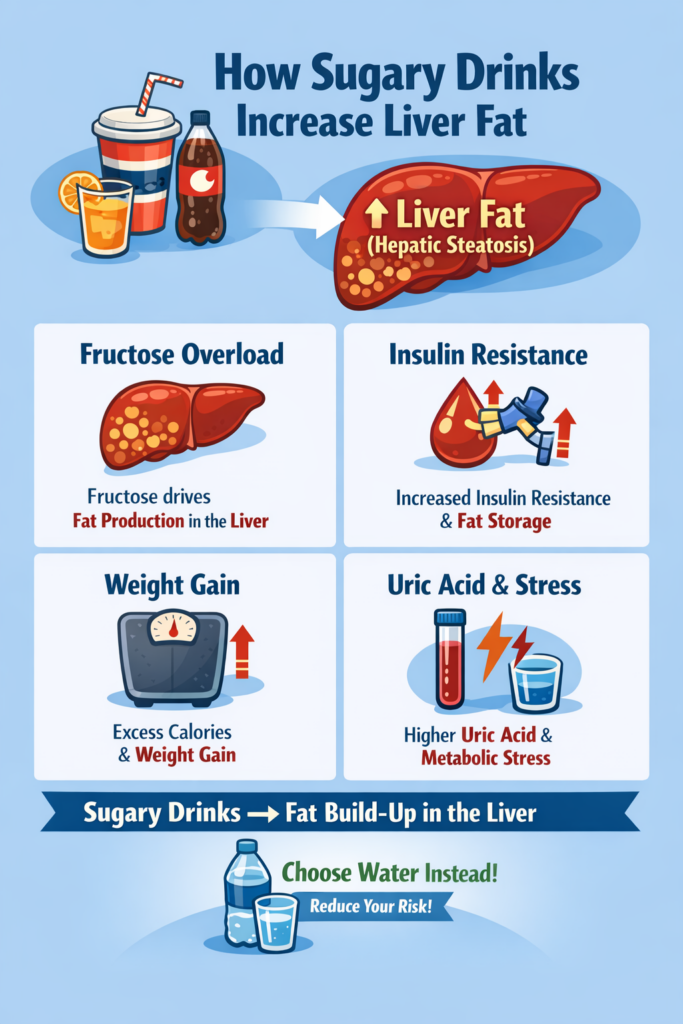
Sugary drinks—especially those high in fructose—promote fat buildup in the liver (hepatic steatosis) through multiple metabolic pathways, increasing the risk of fatty liver disease.
⚙️ How sugary drinks increase liver fat
1) Fructose is processed directly in the liver
- Unlike glucose, fructose is largely metabolized in the liver.
- This drives de novo lipogenesis (new fat production), leading to fat accumulation in liver cells.
2) Increases insulin resistance
- Sugary beverages spike blood sugar and insulin.
- Over time, this contributes to insulin resistance, which promotes further fat storage in the liver.
3) Promotes weight gain and excess calories
- Liquid calories don’t trigger satiety well.
- This leads to higher total calorie intake and weight gain, both major drivers of liver fat.
4) Raises uric acid and metabolic stress
- Fructose metabolism increases uric acid, which is linked to oxidative stress and fat buildup in the liver.
🧬 Additional insights from the article
- Even short-term increases in sugary drink intake can measurably raise liver fat.
- The effect can occur independent of overall weight gain (i.e., direct metabolic effect).
- People with genetic susceptibility may be more sensitive to these effects.
⚠️ What about diet drinks?
- Artificially sweetened beverages reduce sugar exposure but are not metabolically neutral or protective for the liver.
- Some evidence suggests they may still impact metabolism or liver health via other mechanisms.
🧾 Bottom line
- Sugary drinks are a direct driver of liver fat, not just indirectly through obesity.
- Replacing them with water (or unsweetened beverages) is one of the simplest ways to reduce fatty liver risk.