
Fascinating article regarding patients in China, titled “The nomenclature of fatty liver disease and its impact on obesity traits, insulin resistance, and hepatic fibrosis” (Xiang L. et al., Lipids in Health and Disease, 2025), is summarized here.
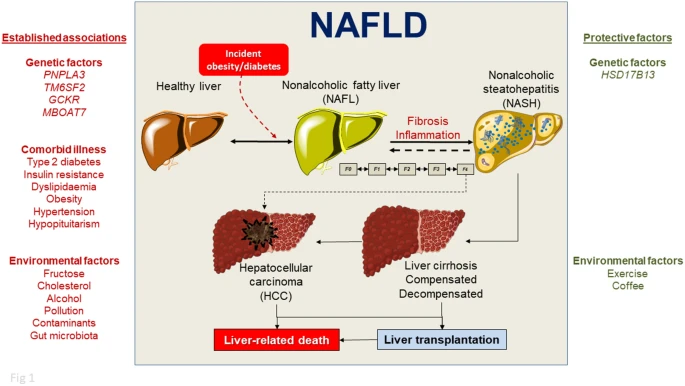
✅ Study Purpose
The authors examine how different definitions/nomenclatures of fatty liver disease (FLD) — namely:
- Nonalcoholic Fatty Liver Disease (NAFLD)
- Metabolic Dysfunction-Associated Fatty Liver Disease (MAFLD)
- Metabolic Dysfunction‑Associated Steatotic Liver Disease (MASLD)
… differ in terms of population prevalence, and how they relate to obesity phenotypes, insulin resistance (IR), and hepatic fibrosis in a Chinese community cohort.
📊 Methods
- Study population: 6,718 community‐dwelling adults aged 35–75 in southeast China (rural region) with complete anthropometry, labs, ultrasound.
- Liver steatosis defined by ultrasound; then categorized into NAFLD (steatosis + excluding heavy alcohol), MAFLD (steatosis + metabolic dysfunction), MASLD (steatosis + one of five cardiometabolic criteria) among others.
- Measured multiple “obesity phenotypes” (BMI, waist‐hip ratio, waist‐height ratio, lipid accumulation product, visceral adiposity index) and IR surrogates (HOMA-IR, TyG, TyG‐BMI, TyG‐waist height ratio/waist circumference).
- Outcome of interest: association of those phenotypes/indices with FLD definitions and with hepatic fibrosis risk (using NAFLD Fibrosis Score—NFS) across definitions.
🔍 Key Findings
- Prevalence in this cohort:
- FLD (by ultrasound) ~ 35.5%
- NAFLD ~ 33.3%
- MAFLD ~ 34.8%
- MASLD ~ 32.8%
- High overlap between definitions: ~91% of the FLD group met NAFLD + MAFLD + MASLD criteria simultaneously.
- Associations: All obesity phenotypes and IR surrogates were significantly associated with all FLD definitions. The odds ratios (ORs) for MAFLD were slightly higher than for the other definitions (NAFLD/MASLD) in relation to obesity/IR metrics.
- For hepatic fibrosis (via NFS): The four FLD definitions all showed a similar magnitude association with intermediate‐to‐high fibrosis probability (ORs ~1.41-1.45) so minimal difference in fibrosis risk by definition.
- In terms of predictive performance (ROC AUC) among indices, the triglyceride-glucose index (TyG) combinations (TyG-BMI, TyG-waist-height ratio, TyG-waist circumference) performed best for predicting FLD and for advanced fibrosis across definitions.
- Interestingly, the subgroup with alcoholic fatty liver disease (AFLD) had lower associations with obesity/IR than non‐alcohol definitions, highlighting heterogeneity in alcohol‐driven disease.
🧠 Interpretations & Implications
- The shift in nomenclature from NAFLD → MAFLD/MASLD captures a broader spectrum of liver steatosis linked to metabolic dysfunction (i.e., MAFLD identifies more people).
- But from a practical standpoint, in this large community cohort the differences between definitions (NAFLD, MAFLD, MASLD) in relation to key risk factors (obesity/IR) and fibrosis risk were minimal. Thus the authors argue: NAFLD remains “pragmatically efficient” for large‐scale screening especially in resource‐limited settings.
- The strong predictive value of TyG‐derived indices suggests they could serve as simple, cost‐effective tools to identify people at risk for FLD/fibrosis, regardless of the exact FLD definition used.
- The findings also highlight the complexity introduced by alcohol + metabolic dysfunction (mixed etiologies) which may not be easily captured by rigid definitions; e.g., the AFLD + MAFLD overlap group had more adverse metabolic features.
🎯 Takeaway for Clinical/Research Use
- If you’re designing screening programs or population‐level surveillance: continuing to use NAFLD (simple criteria) may be entirely reasonable.
- If you’re in a more specialist/tertiary setting focused on metabolic risk stratification, the newer definitions (MAFLD/MASLD) may provide incremental conceptual clarity but may not drastically change risk discrimination in many cases (at least in this Chinese rural cohort).
- Regardless of nomenclature, focus on measuring and acting on obesity/IR markers (especially TyG‐based indices) to identify patients at higher risk of FLD and fibrosis.
- Be cautious when interpreting epidemiologic data: terms used (NAFLD vs MAFLD vs MASLD) matter for comparability across studies.