You’ll start seeing a recurring phrase: Liver-Directed Care or Liver-Directed Therapy, as in–
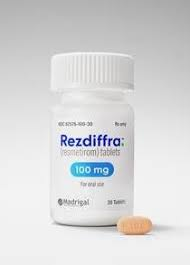
“Madrigal is the biopharmaceutical company that developed Rezdiffra (resmetirom), a medication approved to treat Metabolic Dysfunction-Associated Steatohepatitis (MASH) with moderate-to-severe advanced liver fibrosis, making it the first liver-directed therapy for MASH with this condition. Rezdiffra is a liver-directed treatment, targeting the underlying causes of MASH.”
Madrigal’s Context is nuanced, especially in an era where GLP-1s (Novo Nordisk’s WEGOVY so far) are coming to bear on liver disease.
Madrigal focuses on MASH — formerly known as NASH — a liver disease caused by fat accumulation, inflammation, fibrosis (scarring), which can lead to cirrhosis and more serious outcomes.
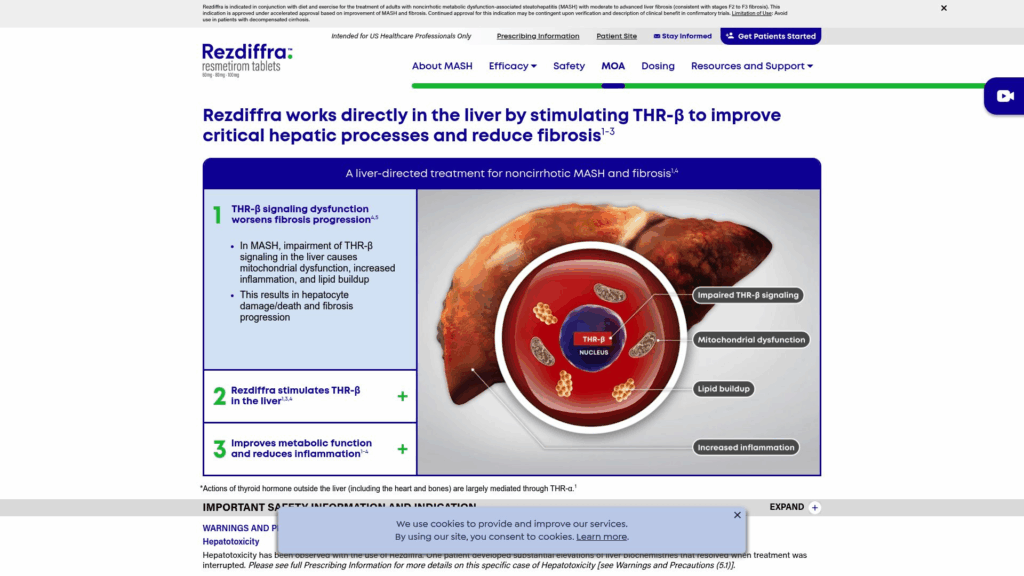
Their lead medicine is Rezdiffra (resmetirom), an oral drug designed to act in the liver by targeting a specific receptor (thyroid hormone receptor-β, or THR-β) to improve liver health.
What “Liver-Directed Care” Means for Madrigal
When Madrigal says “liver-directed therapy” or “liver-directed care,” what they mean includes the following features:
- Direct targeting of liver biology
The treatment works by acting specifically in the liver (THR-β in hepatocytes) to affect the metabolic, inflammatory, and fibrotic processes that occur there. It isn’t just system-wide or symptom-based, but aimed at the organ’s pathology. - Addressing underlying disease mechanisms
Rather than just managing symptoms or complications (e.g. edema, portal hypertension), the approach aims to reduce fat accumulation in the liver, reduce inflammation, correct metabolic dysfunction, improve mitochondrial energy production, and slow or reverse fibrosis. - Use of noninvasive markers and diagnostics
Part of the care/liver-directed model involves using noninvasive tests (like vibration-controlled transient elastography (VCTE) to measure liver stiffness, biomarkers) rather than relying solely on liver biopsy. - Treatment early enough in disease course
Their indication (in the US) for Rezdiffra is in patients without cirrhosis but with moderate to advanced fibrosis (F2-F3). The goal is to intervene to prevent progression to cirrhosis and its complications. - Outcome-oriented goals
Their clinical trials measure endpoints like fibrosis reduction, resolution of MASH, improvement or stabilization of liver stiffness, reduction of risk of portal hypertension or other downstream liver-complications. - Accompanied by lifestyle changes
The therapy is not meant to be used in isolation: diet and exercise (other metabolic-health measures) remain a component of the care plan.
Implications
And it puts emphasis on measurable surrogate endpoints (noninvasive), hoping to translate to real clinical benefit (slower progression, fewer complications) over time.
LDC (liver-directed care) in this sense implies therapies that work at the liver itself, not just general metabolic or systemic therapies.
It also implies a shift in timing: treating before irreversible damage like decompensated cirrhosis.
Here’s a key image from the Rezdiffra website–