

From The Medical University of Vienna, the August 2025 article entitled “Abstaining from alcohol can reverse the course of liver disease even with advanced cirrhosis” describes a study focused on patients with alcohol-related cirrhosis who had overcome previous complications of their liver disease through long-term abstinence from alcohol – a condition referred to in medical terms as “re-compensation”.
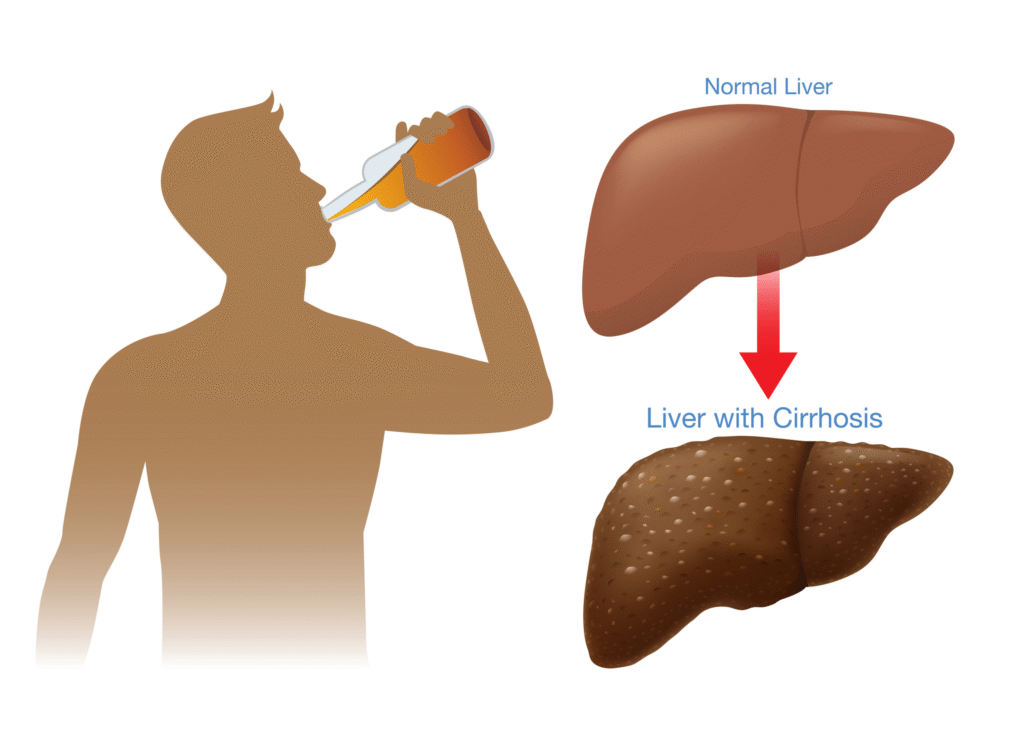
Abstaining from Alcohol Can Reverse Liver Disease—Even with Advanced Cirrhosis
Noteworthy–
- Researchers from MedUni Vienna and Vienna General Hospital (Department of Medicine III) observed that long-term abstinence from alcohol not only improves liver-related complications—but also significantly reduces portal hypertension, even in patients with advanced cirrhosis who had re-compensated (i.e., overcome previous complications).
- Portal hypertension, an elevated pressure in liver blood vessels, is a primary driver of severe cirrhosis complications. This study is the first to demonstrate that continued alcohol abstinence can markedly lower this pressure, advancing clinical recovery.
- The findings reinforce that complete and sustained alcohol abstinence remains essential, not just in early stages of alcohol-related liver disease, but also in advanced cirrhosis.
New News
Previously, cirrhosis was largely viewed as irreversible, especially once complications like portal hypertension had set in. While abstinence was known to halt progression, reversals in advanced cases were rare.
This study, however, shows that:
- Even after cirrhosis-related complications have occurred, long-term sobriety can bring meaningful physiological improvements.
- Lowering portal hypertension may translate into fewer serious outcomes such as variceal bleeds or ascites.
Clinical Impact at a Glance
| Stage of Liver Disease | Effect of Alcohol Abstinence |
|---|---|
| Early-stage liver disease | Known to reverse liver injury and inflammation |
| Advanced cirrhosis with complications | Improvement in portal hypertension and overall prognosis |
| Implication | Emphasizes that abstinence should be pursued at all disease stages |