LiverRight helps SUD inpatient, outpatient and virtual providers to address liver disease. We have our own Hepatology physicians and Hepatology APPs (PAs, NPs) licensed across all 50 states, and we take insurance.

This seminal article is from June of 2024, well worth reading:
Liver Injury in Patients with Substance Use Disorder.
INTRODUCTION
It is well established that certain substances, whether natural or synthetic, result in liver injury when ingested. The problem of liver injury in patients with substance use disorder (SUD) is of emerging importance, given the epidemic of illicit substance use (SU). The purpose of this review is to briefly summarize the clinical approach to acute liver injury; to explore the relationship between SU and liver injury; to understand the potential for hepatotoxicity from drugs used to treat SUD; and finally, to propose an approach to SUD in patients with liver disease.
CLINICAL APPROACH TO ACUTE LIVER INJURY
DILI (Drug-Induced Liver Injury) accounts for more than half of all cases of acute liver failure in the United States. It occurs through one of 3 mechanisms; namely, direct, indirect, and idiosyncratic. Direct DILI is characterized by a predictable, dose-dependent response, as seen in the prototypical example of acetaminophen toxicity. In contrast, idiosyncratic DILI is associated with an unpredictable, nonreproducible reaction that has a variable latency period. Indirect DILI causes liver injury not through direct hepatotoxicity of the drug but rather by means of the biological action of the drug itself. For example, antipsychotic drugs that are associated with increased adiposity and weight gain may result in fatty liver disease.

Overview
First, approximately 46.8 million Americans (16.7% aged 12+) have an SUD.
This journal article addresses the growing clinical concern of liver injury among individuals with SUD. It outlines key diagnostic strategies and explores how various substances, including both illicit drugs and medications used to treat SUD, can impact liver health.
1. Clinical Approach to Acute Liver Injury
- DILI is responsible for over half of acute liver failure cases in the U.S.
- DILI can occur via three mechanisms:
- Direct: Predictable and dose-dependent (e.g., acetaminophen toxicity).
- Idiosyncratic: Unpredictable, with variable onset.
- Indirect: Not due to inherent toxicity, but from secondary effects like weight gain from antipsychotics causing fatty liver.
2. Takeaways
- Acute liver injury in SUD patients requires a careful, mechanism-oriented diagnostic workup.
- Various illicit substances carry different risks and injury profiles—recognition is key to appropriate management.
- Interventions such as discontinuation of the offending agent, supportive care, and acetylcysteine (NAC) often lead to clinical resolution.
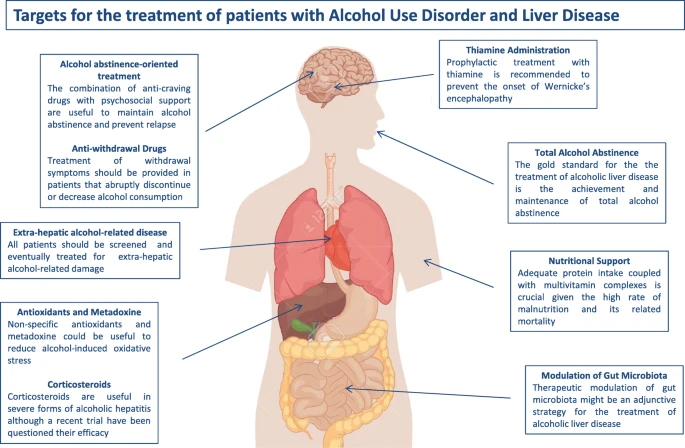
- The image that follows address treatment targets in SUD and Liver Disease–