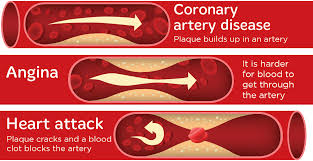
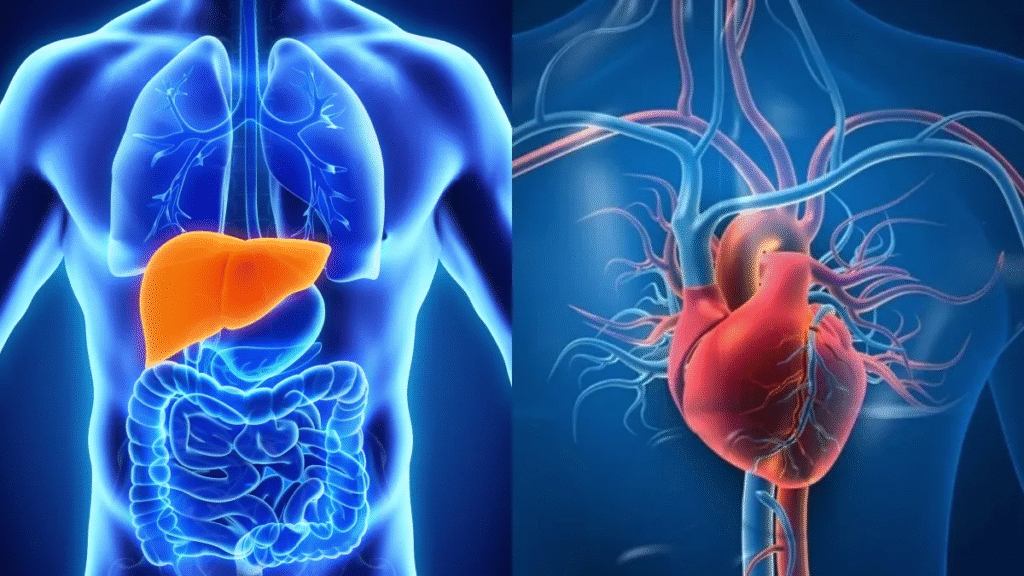
This 21 July 2025 article, “Non-invasive scoring systems of liver fibrosis predict prognosis in the cohort with myocardial infarction,” addresses the overlap between Liver Disease and Heart events (acute myocardial infarction or AMI).
Blood‑test‑based liver fibrosis scores—especially FIB‑4 and APRI—serve as valuable, independent prognostic markers after myocardial infarction. They’re easy to implement and may enhance cardiovascular risk stratification, though choice of index should consider whether patients have T2DM (Type 2 Diabetes).
The retrospective cohort is from a Singapore hospital, tracking 3,287 AMI patients (2011–2021) over ~2.7 years average follow-up. Patients were categorized into low, intermediate, or high fibrosis risk per score. Nearly half (1,547/3,287) were flagged high-risk by at least one fibrosis index.
Mortality Risk:
A dose–response pattern: higher score risk tiers correlated with steadily increasing 5‑year all‑cause mortality.
High-risk FIB‑4 posed a near doubling of death risk (adjusted hazard ratio [aHR] ≈ 1.79; p < 0.001). As to High-risk APRI, it similarly predicted mortality, and NFS was strongly predictive—but notably, NFS’s prognostic power held only for those with T2DM.
FIB‑4 and APRI remained strong mortality predictors regardless of diabetes status. NFS (NAFLD Fibrosis Score) added prognostic insight only among T2DM patients.
SUMMARY:
These non‑invasive tests (NITs)—which use standard blood data—could supplement cardiovascular risk models post‑AMI.
FIB‑4 appears especially robust for both diabetic and non‑diabetic AMI patients. NFS benefits appear limited to diabetic subsets, likely due to its inclusion of glucose-related variables.