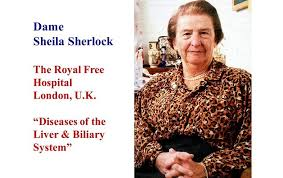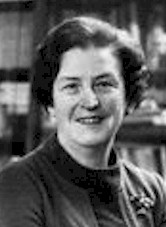
Honoring one the great original innovators in Hepatology: Dame Sheila Patricia Violet Sherlock (1918–2001) was a pioneering British physician widely regarded as the founder of modern hepatology—the study of liver diseases. Her career transformed liver medicine through groundbreaking research, teaching, and clinical innovation.
🎓 Early Life & Education
- Born in Dublin and raised in England, Sheila Sherlock overcame gender-based barriers when she was initially rejected by several medical schools before earning her place at Edinburgh University in 1936. She graduated top of her class in 1941, won the prestigious Ettles Scholarship, and earned her MD with a gold medal in 1945.
🩺 Clinical & Research Breakthroughs
- Worked at Hammersmith Hospital post-medical school, mastering liver biopsy techniques and investigating hepatitis, including malnutrition-related liver damage.
- Founded the Liver Unit at Royal Free Hospital in 1959—initially in a humble rooftop hut—which drew trainees globally. Her team made major advances in areas like bilirubin metabolism, portal hypertension, hepatic encephalopathy, autoimmune liver disease, and liver cancer.
📚 Author & Educator
- Authored Diseases of the Liver and Biliary System in 1955, a seminal textbook that remains widely used today. She published over 600 research papers and held influential editorial roles in journals such as Gut and the Journal of Hepatology.
🏅 ‘Firsts’ & Honors
- First female Professor of Medicine in the UK (1959), first woman Vice-President of the Royal College of Physicians, founder or president of the British Liver Trust, British Society of Gastroenterology, and the International Association for the Study of the Liver.
- Awarded Dame Commander of the Order of the British Empire in 1978. Received multiple honorary degrees and, in 2001—the year she died—became a Fellow of the Royal Society.
🌍 Legacy & Influence
Sherlock’s career established hepatology as a distinct specialty, pioneering needle biopsy techniques and advancing diagnostic tests for autoimmune liver conditions. She nurtured generations of liver specialists and fostered a global community of clinicians through mentorship and international collaboration. Today, her name lives on through the Sheila Sherlock Liver Centre at the Royal Free, scholarships, and awards in her honor.
In summary, Dame Sheila Sherlock was a trailblazer whose clinical insight, scientific discovery, textbook authorship, and leadership broke barriers in medicine—especially for women—and permanently shaped the landscape of liver disease research and treatment.