THE FEHV: The Foundation for the Study of Viral Hepatitis is a leading international non-profit organization in the field of hepatology , with top specialists in liver diseases and molecular biology. At our clinic in Madrid, we treat all types of liver diseases (autoimmune hepatitis, cholangitis, fatty liver, viral hepatitis, etc.).
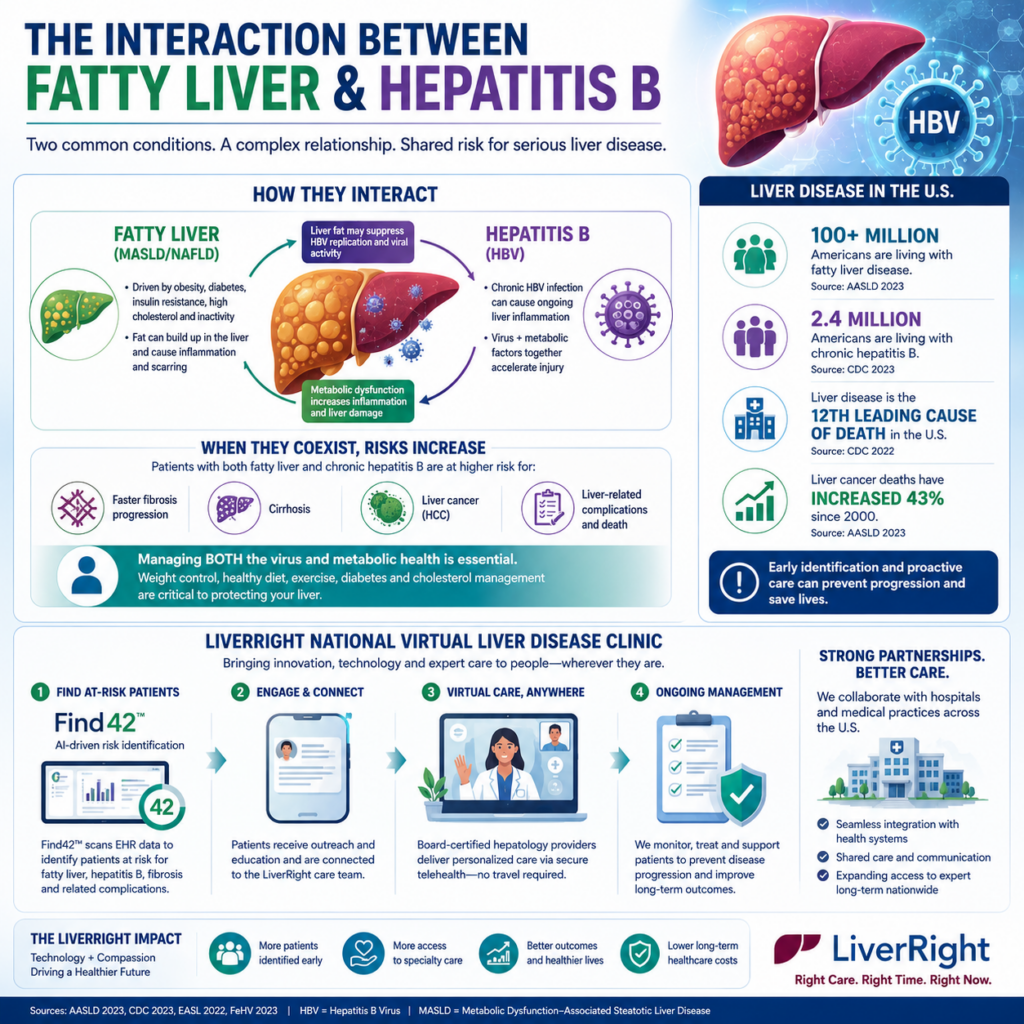
The article titled “Interaction Between Fatty Liver and Hepatitis B” from FEHV explains that fatty liver disease (now commonly called MASLD/MAFLD) and chronic hepatitis B (HBV) frequently occur together, creating a complex interaction that can influence disease progression and long-term outcomes.
Key Points
1. Fatty liver and hepatitis B are increasingly overlapping conditions
- As obesity, diabetes, and metabolic syndrome become more common worldwide, more patients with chronic hepatitis B are also developing fatty liver disease.
- This overlap is becoming a major clinical challenge for hepatologists.
2. The relationship is not straightforward
- Some studies suggest that liver fat may suppress HBV replication and reduce viral activity.
- However, the metabolic dysfunction that drives fatty liver (obesity, insulin resistance, diabetes) can simultaneously increase liver inflammation and damage.
3. Fatty liver can worsen long-term outcomes
- When fatty liver coexists with chronic hepatitis B, patients may face a higher risk of:
- Liver fibrosis
- Cirrhosis
- Hepatocellular carcinoma (liver cancer)
- Metabolic risk factors often become important drivers of disease progression alongside the virus itself.
4. Managing metabolic health is critical
- Treatment should not focus only on controlling HBV.
- Patients should also address:
- Excess weight
- Diabetes
- Elevated cholesterol
- High triglycerides
- Physical inactivity
- Lifestyle modification is considered a key part of preventing progression to advanced liver disease.
Main Takeaway
The central message is that hepatitis B and fatty liver disease interact in a bidirectional way. While fatty liver may reduce some aspects of viral activity, the metabolic abnormalities that cause fatty liver often increase the risk of fibrosis, cirrhosis, and liver cancer. Therefore, patients with HBV should be evaluated and treated not only for viral infection but also for underlying metabolic disease.
Implications
This article reinforces a growing theme in hepatology: viral liver disease and metabolic liver disease can no longer be managed as separate silos. For HBV populations, identifying obesity, diabetes, dyslipidemia, and steatosis early may be as important as monitoring viral load, because these metabolic factors increasingly determine who progresses to fibrosis, cirrhosis, and liver cancer.